| OCR Text |
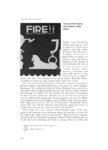
Show ELECTION OF 1856 bait. Shortly after the election, Horace Greeley’s New York Tribune printed the broadside as well as an article that opined that Buchanan, “old bachelor though he is” (Buchanan never married) had become the instrument of Mormon hopes for getting Utah and polygamy into the Union—perhaps the Mormons even hoped that Buchanan at the right time might renounce “his bachelorship, . . . [and] make up for lost time by taking [the prescribed] seven wives.” The sarcasm of the article was aimed at the slave-holders of the South: Because southerners made slaves their concubines, it was a small step for them to accept the Mormon version of sexual plurality, especially if it might gain the South two votes in the Senate once Utah got into the Union.41 The New York Herald also printed the handbill, and it became grist for such politicians as Senator Lyman Trumbull of Illinois and Representative Morrill, who saw it as another example of the saints’ treachery.42 During the first week of July, President Pierce summoned Bernhisel to the White House to give him a dressing-down. Pierce was furious about rumors he was hearing concerning the Mormons’ supposedly rigging or tampering with juries—no doubt an echo from the Gunnison trial. Moreover, Pierce had heard that Governor Young was preaching the doctrine of exclusion, that is, telling the saints not to have anything to do with Gentile outsiders. U.S. army officers and Utah’s federal territorial officials had been experiencing one run-in after another with the Utah settlers, and their one-sided and exaggerated reports had been flowing to the nation’s capital for several years. Sometime after his stressful meeting with Pierce, Bernhisel met with an excited congressman, who wanted to cut off a shipment of arms to Utah’s territorial militia. “We shall have trouble with your people,” the congressman told Bernhisel, “and I think we should not put arms into their hands.” Of greatest concern to Bernhisel, however, was the looming Morrill Anti-Polygamy bill, which he now thought would get through the House, although he hoped that he had enough votes in the Senate to kill it. “The feeling and prejudice among members of both branches of the national Legislature against Utah, and its domestic institution were never before so great as at this time, and the hostile feeling seems to be on the increase, and is not confined to northern [Republican] members alone, but is shared by some southern members, slave holders, who profess to believe in the principle of [federal] non-intervention [in the territories].”43 The latter were running for political cover because of the Republican campaign assaults. John Taylor and George A. Smith—the two men given the task of presenting Utah’s statehood petition to Congress—did not know what to do. They were among Utah’s best and ablest. Both had served in the local 41 New York Tribune, November 10, 1856. New York Herald, November 9, 1856. For the Trumbull and Morrill expressions, see Poll, “The Mormon Question Enters National Politics,”130. 43 Bernhisel to Young, July 17, 1856, Brigham Young Office Files, Church History Library. 42 121 |