| OCR Text |
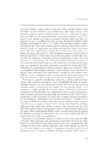
Show FALL 2013 UHQ pp 304-385_UHQ Stories/pp.4-68 9/16/13 1:25 PM Page 363 WALLACE hENry ThUrMAN found no redeeming value in the film and Variety called it a “tiresome preachment of the facts of life and parental neglect.”96 Thurman completed these screenplays as his last major literary works before his death. While Thurman spent most of his literary career in Southern California and New York City, he had roots in Utah and continued to visit Salt Lake City throughout his life. Thurman’s experiences in Utah and in his grandmother’s home surely affected him and his perceptions of race relations; however, the ways in which growing up in Utah influenced him are not always clear. For example, although Thurman was raised and mostly educated in the Mormon-dominated community and public school system, he never converted to the religion and he claimed that living in this environment had not greatly impacted him.97 Furthermore, while he had to deal with racism as a young man in Salt Lake City, he made little mention of his personal experiences with racism in his writings. One such experience occurred in 1918, when soldiers attacked Thurman and a young black woman, Thelma Steward, at Second South and Main Street in Salt Lake City. Thurman was “badly beaten” and Steward was “loaded into an automobile by a crowd of soldiers,” yet the police apparently allowed the assailants to escape. According to the Salt Lake Telegram, Reverend George W. Harts, a pastor of Calvary Baptist Church, then brought the issue of police negligence before the city commission on behalf of Thurman and Steward and filed “condemnatory resolutions adopted at a mass meeting of negro [sic] citizens.”98 What came of these resolutions, or how Thurman responded to the event, remains unclear. However, while Thurman himself made no such claims, it is tempting to believe that such incidents might have influenced his decision to join the group of radical Harlem writers dedicated to representing African Americans as “New Negro[es]”—who, as Locke claimed, would no longer be passive or obsequious. Locke wrote that “the Negro of today [must] be seen through other than the dusty spectacles of past controversy. The day of ‘aunties,’ ‘uncles’ and ‘mammies’ is . . . gone.”99 McKay captured the sentiments and character of this “New Negro” in his sonnet, “If We Must Die”: If we must die, O let us nobly die So that our precious blood may not be shed In vain; then even the monsters we defy Shall be constrained to honor us though dead! ..................................... Like men we’ll face the murderous, cowardly pack, Pressed to the wall, dying, but fighting back!100 96 Ibid. Thurman, “Quoth Brigham Young,” 236. 98 “Negligence Charge is Hurled at Police,” Salt Lake Telegram, April 18, 1918. 99 Alain Locke, “The New Negro,” in The New Negro: An Interpretation, ed. Alain Locke (New York: Johnson Reprint, 1968), 3–16, 5. 100 Claude McKay, Selected Poems of Claude McKay (New York: Harcourt, Brace and World, 1953), 36. 97 363 |