| OCR Text |
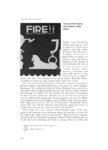
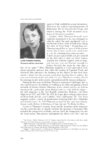
Show FALL 2013 UHQ pp 304-385_UHQ Stories/pp.4-68 9/16/13 1:25 PM Page 357 WALLACE hENry ThUrMAN outside funding, he launched Harlem: A Forum of Negro Life, a moderate, more broadly focused magazine that was also devoted to displaying work by all young writers; it too failed after its premier issue.60 Along with the collapse of Harlem, 1928 saw the disintegration of Thurman’s whirlwind marriage to Louise Thompson, a student at the New School of Social Research and Hughes’s secretary.61 The marriage was illfated from the start. As suggested by the filmmaker Isaac Julien in Looking for Langston, Thurman was not only a literary luminary, but he, along with Locke, headed the monarchy of Harlem’s black gay community. It is now well documented that many of the writers—including Cullen, McKay, Nugent, Hurston, and possibly Hughes—were homosexual, although, in the case of Cullen, McKay, and Thurman, some of them sought to cloak their preference in heterosexuality. The openly gay Nugent was the exception; his short story “Smoke Lilies and Jade,” which was published in Fire!!, had homosexuality as its central theme.62 According to West, Thurman had “long wanted to be a father, but he had not taken into consideration that he must first be a husband.”63 Frustrated by her husband’s financial problems, heavy drinking, and continued interest in men, Thompson left Thurman after six months, although she never officially divorced him.64 Thompson later admitted that she “never understood Wallace. . . . He took nothing seriously. He laughed about everything. He would often threaten to commit suicide but you knew he would never try it. And he would never admit that he was a homosexual. Never, never, not to me at any rate.”65 No existing records from the time Thurman 60 Van Notten, Wallace Thurman’s, 162. Louise Thompson, born in Chicago on September 9, 1901, was one of the first black women to graduate from the University of California, Berkeley. She eventually moved to New York City to study at the New School of Social Research. Thompson entered Harlem Renaissance circles through a friendship with painter Aaron Douglas and his wife, Alta. Here she became acquainted with Langston Hughes, became his secretary, and later helped him found the Harlem Suitcase Theatre. She also met and married Wallace Thurman in New York City. Although they separated after six months, Thompson reportedly typed the manuscript for The Blacker the Berry and nursed Thurman in the hospital prior to his death. She joined the Communist Party, actively participated in it in America, and spent time in Russia. In 1940, Thompson moved to Chicago, where she married William Patterson, a prominent figure in the American Communist Party. In the 1960s, she was involved in the defense of Angela Davis and Black Panther leaders. She died in 1999, at ninety-seven years old. “Louise Patterson, 97, Is Dead: Figure in Harlem Renaissance,” New York Times, September 2, 1999. 62 Looking for Langston, directed by Isaac Julien (Sankofa: London, 1989); George Chauncey, Gay New York: Gender, Urban Culture, and the Making of the Gay Male World, 1890–1940 (New York: Basic Books, 1994), 264–65. 63 West, “Elephant’s Dance,” 60; see also Van Notten, Wallace Thurman’s, 200. In a letter to Fay Jackson, Thurman wrote that he was not married, “not now or ever . . . and since I have no paternal instincts would be a dead waste of time, talent, and industry. If I ever mate up it will be free love and brief.” 64 West, “Elephant’s Dance,” 81. In 1929, shortly after he arrived in New York City, Thurman was arrested on a morals charge for accepting a proposition from a man in a public restroom. He appeared as a major player in most accounts of queer Harlem. Wallace Thurman to William Jourdan Rapp, May 7, 1929, in Singh and Scott, Collected Writings, 138. 65 Arnold Rampersad, The Life of Langston Hughes: Volume I: 1902–1941, I, Too, Sing America (New York: Oxford University Press, 1986), 172. Emphasis in original. 61 357 |