| OCR Text |
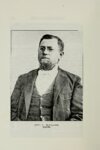
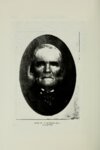
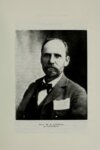
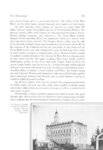
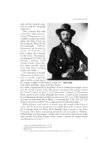
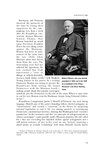
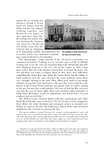
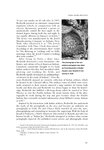
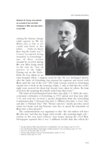
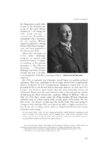
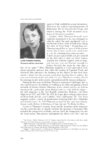
Show 244 Utah Historical Quarterly Bluffs for the next six years, operating a successful construction business and serving as branch president for the church. His most notable professional achievement during this time was his work on the territorial capitol in Omaha. Folsom contracted with the architects of the capitol to build the colonnade for this two-story classical building. The columns were roughly forty feet high and crowned with elaborate Corinthian capitals. Some measure of Folsom's success as a builder during this period can also be taken from the fact that the man who purchased his business in 1860 was obliged to hire "several contractors, builders, and carpenters" in order to complete the work already in progress.9 In 1860, at the age of forty-five, William Folsom made preparations for the second time to go to the Great Basin. Together with his wife and six children, he joined a wagon train led by Joseph W. Young, brother of Brigham Young. This was a well-organized company, the first to make the round-trip from Utah to the Missouri River and back again in a single season. On October 3, 1860, the Folsoms finally arrived in the Salt Lake Valley. Shortly thereafter, William Folsom opened a shop on Main Street and announced his intention to do business as an architect. When Folsom arrived on the scene in Salt Lake City, he brought with him experience and skills that were unique in the territory. He had traveled extensively in the United States, visiting Saint Louis, New Orleans, San Francisco, Philadelphia, Buffalo, Cleveland, and other cities. In addition, he had lived in the Midwest for more than a decade longer than many of the pioneers. During this time he had gained experience and confidence as a builder, and he had profited from the opportunity to learn about the newer styles of architecture that had become popular since the departure of most of the Mormons. As a result, the buildings he designed in the next few years reflected a greater sophistication and a better understanding of architectural styles than those of most of his Utah contemporaries. Folsom's career was also aided by the fortunate timing of his arrival. Trade with the recently arrived United States Army had brought increased prosperity to the Mormon settlements. Salt Lake City was expanding rapidly, and a great deal of building was underway. Moreover, Truman O. Angell, the overwerked church architect who had designed most of the principal buildings of the city, was in poor health. Consequently, Folsom's abilities were recognized quickly. He was appointed 9 Statement by F . T . C Johnson ir the 1907 Pottawattamie County, Iowa, centennial brochure, quoted in Nina F. Moss, "Biographical Sketch of William Harrison Folsom," April 6, 1967, LDS Archives. |