| OCR Text |
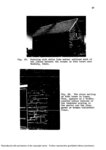
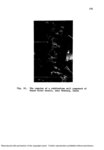
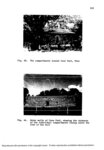
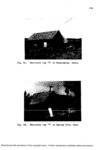
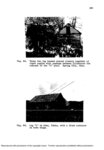
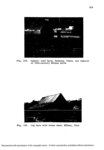
Show BURGON’S CROSSING turned to the safety appliance that would have stopped the Utah accident from happening: a train-actuated crossing guard. The sole warning sign at Burgon’s Crossing was a crossed-buck sign reading “RAILROAD CROSSING.” There were 2,200 railroad crossings in Utah, of which only 125 were “protected by train-actuated signals” and twenty more had watchmen.28 The state Public Service Commission had “recently recommended” that 137 more crossings receive additional safety appliances.29 As a temporary measure elsewhere in the state, Weber County formed junior traffic patrols where a student would get out of every school bus at railroad crossings to see if a train was approaching before the bus would be allowed to cross the tracks.30 This episode effectively illustrated contemporary attitudes towards safety and the causes of accidents. Dr. Richards analyzed what happened, seeking to find a root cause, which he found in the weather conditions. According to Richards: We allayed all hysteria and concluded from every possible angle that this was purely an accident. The locomotive engineer said that the bus stopped. He knew it stopped because he saw it standing there, but because of a peculiar type of cloud formation that was hanging near the ground, the driver's view must have been obscured and as he advanced forward onto the tracks, the train struck the middle of the bus.31 The search to find a person to blame by their actions or lack of action was common in safety thinking at this time, dominated as it was by the psychological approach.32 The bus driver was exempted from blame because of the weather. Richards did not take the analysis one step further, though many others did. A safety appliance, if it had worked correctly, would have certainly averted the collision. The official accident report for the Interstate Commerce Commission concluded with some common sense recommendations. They recognized that not only was the accident a result of not having an additional safety appliance, like the crossing guards, but it also reflected the lack of the correct rules to govern driver behavior. Such rules, turned into habits, made a person’s activities safer. The recommendations: that more stringent rules covering the operation of school buses over grade crossings should be prescribed and strictly enforced; that all drivers of school buses be required to open the front side door when the stop is made at each railroad crossing at grade; and that, whenever practicable, buses should be routed so as to avoid grade crossings that are not protected by watchmen or devices to give visual warning when a train is approaching.33 <http://www.enquirer.com/editions/1998/05/10/kybusa110.html>, accessed November 5, 2012. 28 “Agencies Join.” 29 “23 Killed.” 30 “ICC Starts.” 31 Barton, ed., “The Memoirs of Dr. Paul,” 73. 32 See Michael Guarnieri, “Landmarks in the History of Safety,” Journal of Safety Research 23 (1992): 151-58. 33 ”Interstate Commerce Commission.” 167 |