| OCR Text |
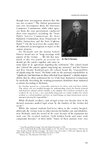
Show ELECTION OF 1856 Yet, Douglas appeared to be sympathetic. As chairman of the Senate’s powerful committee on territories, Douglas told the Mormon representatives he had been able to defeat the mad rush to dismantle Utah Territory by giving its land to surrounding states and territories—the objective was to neuter Mormon local government (and local choice) by making the saints isolated minorities in surrounding governments. However, Douglas also told the delegates that if they insisted upon presenting their petitions for statehood, they would pay a heavy price. The petitions would certainly go down before heavy majorities in both the House and Senate, and the bill to cut Utah into pieces might gain new strength. Moreover, Morrill’s anti-polygamy bill continued to be a problem, which, if enacted, threatened to put Utah in the middle of a widespread and unprecedented federal prosecution. Because of the strong winds blowing against the saints, Douglas told Taylor and Smith to be patient. If Buchanan were elected and if the Democrats gained control of Congress—and if popular sovereignty became more widely accepted—then something might be done for the Mormons.50 The “ifs” were large. Taylor and Smith reluctantly accepted Douglas’s advice. Their decision to stand down was carried in the national press, and the Mormons went on record with the face-saving comment that “the present opposition [against them] to be only for party effect,” which might end after the election.51 But nothing that Taylor and Smith did—or did not do—appeared to help. The Mormon question had become too much a part of the campaign. In August, the New York Herald, arguably the nation’s most popular newspaper, began more articles on Utah. “Humanity shudders at the degradation, disgrace and suffering which those unhappy females are compelled to submit to,” said one article about the women in Utah. “The hard labor, the cruel treatment, and personal neglect they endure is absolutely shocking. [Moreover] the manner in which the local government is conducted, the vulgarity of the public documents, and the occasional proclamations of the Governor of this benighted Territory, afford the most complete evidence of bigotry, misrule and tyranny.”52 The newspaper made no attempt to document any of its sweeping charges. It is not known what prompted the Herald’s fierce obloquy, although there was a group of men in Utah, opposed to Mormon rule, who during the summer had begun a letter-writing campaign to put conditions in the territory in the worst possible light. One of the most damaging letters was from “Veritas,” which appeared in the New York Tribune. While the identity of its author is unknown, a leading candidate is William W. Drummond, an 50 “Report of Taylor and Smith to the Utah Legislative Assembly,” 346-8; John Taylor to Brigham Young, July 12, 1856, Brigham Young Office Files, Church History Library. 51 New York Tribune, July 5, 1856. 52 Historian’s Office, Historical Scrapbooks 1840-1904, box 1, fd. 4, book 4, p. 57, quoting New York Herald, August 20, 1856. 123 |