| OCR Text |
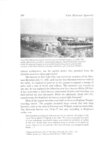
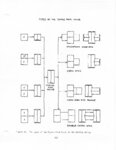
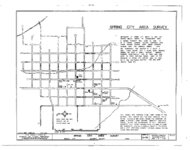
Show Architectural History of Utah 209 recorded and preserved.1 Two major categories of architecture are examined in this brief history: the vernacular, referring primarily to early pioneer structures, and the stylistic or "high style" (both architect and non-architect designed) of the late nineteenth and early twentieth centuries. In Utah, as in the rest of the United States, these are not exclusive categories, for the combination of vernacular materials and building methods with various "high style" features is common. The influence of the Mormon faith upon town planning and religious architectural forms is one of the unique features of Utah architecture. There was no isolated homesteading in the state as there had been in other parts of the West and Midwest; instead, the primary settlement pattern was a gridiron form oriented to the cardinal points of the compass. Referred to as the plat of the "City of Zion," this form is attributed to Joseph Smith and was formulated in the 1830s prior to the settlement of Utah. Basically the plan calls for a city one-mile square, divided into blocks containing ten acres each. Each block was subdivided into twenty half-acre lots; each lot was allowed one house, and all houses had to have twenty-five-foot setbacks from the street. The streets were unusually wide and the central row of blocks, often larger than the others, had one or more blocks designated for civic, religious, educational, and recreational functions.2 Unlike the New England "common" or green that was usually surrounded by public and private buildings and the Midwest courthouse square with a town hall and/or a courthouse on a small landscaped site, the "City of Zion" concept accommodated such buildings as the county courthouse and jail, stake tabernacle, and social hall.3 This arrangement is still clearly visible today in many Mormon villages. The promotion of mining in the 1860s by Col. Patrick E. Connor brought about a second pattern of settlement.4 With the coming of the railroad in 1869, boom towns dominated by Gentiles sprang into existence, often in a linear pattern and affected by the topographical features near the mines. Utilizing the new and efficient technology of the Dr. Goss is assistant professor of architecture at the Graduate School of Architecture, University of U t a h . 3 Many Indian structures, particularly in southeastern U t a h , date from as early as A.D. 700. Additionally, trappers built some log structures prior to the settlement period. For the purposes of this history, however, only buildings erected after the arrival of the Mormons in 1847 will be considered. 2 Lowry Nelson, The Mormon Village (Salt Lake City, 1952), 38-39. 3 Paul Goeldner, Utah Catalog: Historic American Buildings Survey (Salt Lake City, 1969), 11. 4 Leonard J. Arrington, Great Basin Kingdom: An Economic History of the Latter-day Saints, 1830-1900, 182. (Cambridge, Mass., 1958), 201--2. |