| OCR Text |
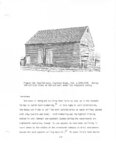
Show BOOK REVIEWS brothers’ involvement in robbing stages, sheep camps, and stores before progressing to bigger targets. At one such target, the Belle Fourche Bank in South Dakota, the Wild Bunch failed to rob the bank (getting away with money from some of the customers) but did receive unwanted recognition in the form of rewards for their capture. They were later arrested in Montana and returned to South Dakota for trial. They escaped from jail, and although two were caught, Curry and the Sundance Kid escaped. Smokov details various train robberies attributed to the Wild Bunch, including one near Winnemucca, Nevada, and two in southern Wyoming. Of significance to Utahns, he makes the case that Utah’s Butch Cassidy did not participate in the actual robberies, but did perhaps take part in the planning and the splitting of the loot. This argument, of course, contradicts a scene in the movie Butch Cassidy and the Sundance Kid (1969) that portrays Butch Cassidy as one of the perpetrators of the robbery. Smokov makes the point that Butch Cassidy did not always lead the Wild Bunch. According to Smokov, he was the leader when it came to robbing banks, but Kid Curry was definitely the leader when it came to robbing trains. Smokov traces Kid Curry through Texas, where the famous picture of the Fort Worth Five was taken, into Montana, where Curry led Train Syndicate members Deaf Charley Hanks and Ben Kilpatrick in the Great Northern Train robbery, and finally to Colorado, where, in a gunfight following an attempted train robbery, Kid Curry took his own life by shooting himself in the head. Smokov’s book supplies a needed addition to the literature of the Wild Bunch and the Old West. A. JOEL FRANDSEN Elsinore, Utah BOOK NOTICES Cedar City. Images of America Series. By Jennifer Hunter. (Charleston, SC: Arcadia Publishing, 2012. 127 pp. Paper, $21.99.) On November 11, 1851, a band of thirty-six men arrived in the middle of a blinding snowstorm to begin the settlement of Cedar City. Before the year was out, log cabins were under construction, including one by George Wood, now located in the Frontier Homestead State Park. From its tentative beginning as a Mormon pioneer settlement, to its designation as Utah’s “Festival City,” nearly a century and a half of history can be found in the pages of this book by Cedar City resident Jennifer Hunter. 297 |