| OCR Text |
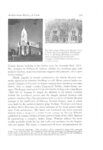
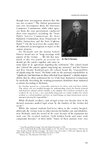
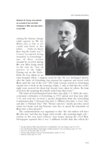
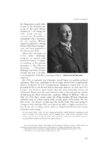
Show UTAH HISTORICAL QUARTERLY homespun variety the Mormons manufactured. Customers of any or no religion would have access to such paper in the stationery shops of the city, and the idea that Young could instantly and confidently identify the author of the note as a Gentile by the appearance of the paper is incredible. Moreover, the last statement, in which Young guarantees Kelly’s safety, would have been a tacit admission that Robinson’s assassins were Mormons and that Young had the authority to tell them to leave Kelly alone. Otherwise, the only assurance he would be giving Kelly is that the local police would look after him, and the priest would derive little comfort from that, given the protection they afforded Dr. Robinson. The problem with this account arises from the unreliability of its source, Father Denis Kiely, who arrived in Utah in the 1870s. Kiely claimed to have known Kelly and to have obtained his information directly from Kelly. We do know that Kelly revisited Salt Lake City several times in later years; however, Kelly’s memory of his relationship with Brigham Young might have deteriorated, or Kiely might have altered this narrative to serve his project of creating a myth of Mormon–Catholic comity.8 At any rate, even if the report of Young’s proffered protection were only approximately true, not only had Catholic–Mormon relations made a promising start, but the episode had also “cooled the ardor of those who had hoped to find in [Kelly] a champion of the forces of anti-Mormonism.”9 Furthermore, both of Kelly’s encounters with Young demonstrate the amicable state of relations between the two Utah churches in the 1860s. Utah Catholics struggled through the next few years and were preoccupied with building their first church, which they finished and dedicated in 1871; little indication exists of significant dealings with the Mormons during this period. The issue next emerges in the writings of Father Lawrence Scanlan, the great pioneer priest and first bishop of Salt Lake City, who brought Utah Catholicism to institutional maturity. Scanlan (1843–1915) was an Irishman educated at All Hallows College in Dublin, an institution created to train missionary priests who would minister to expatriate Irish scattered by the potato famine. Immediately following his ordination, Scanlan departed for California and arrived in San Francisco in 1868. After a brief parish ministry there, he was sent to the mining frontier of Nevada, where he received his baptism of fire serving rough Irish miners in Pioche. Scanlan returned briefly to Petaluma, California, but in 1873 he was sent to Utah, where he remained for the rest of his life.10 Although Scanlan's obituary includes the statement that “His relations with Brigham Young were always cordial and pleasant, and no antagonism 8 See Henry Nash Smith, Virgin Land: The American West as Symbol and Myth (Cambridge: Harvard University Press, 1950). 9 David L. Bigler and Will Bagley, Innocent Blood: Essential Narratives of the Mountain Meadows Massacre (Norman, OK: Arthur H. Clark, 2008), 262. 10 Robert J. Dwyer, “Pioneer Bishop: Lawrence Scanlan, 1843–1915,” Utah Historical Quarterly 20 (April 1952): 135–58. 234 |