| OCR Text |
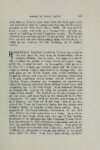
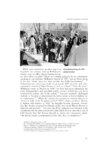
Show ATHLETIC PROTESTS Negroes.”48 Three months later, Wilkinson worked with student leaders to find “acceptable Negro speakers,” then confronted a new wrinkle. Administrators had previously ruled that any student caught selling marijuana “would be terminated immediately.” However, they also learned that BYU’s sole “American Negro” student was reportedly “selling marijuana.” “[B]efore we suspend him from school,” Wilkinson recorded, “he had better be convicted in the courts; otherwise . . . there would be a public clamor to the effect that he was being suspended because he was Negro.” Staff members objected that “we ought to treat him as we have done other students . . . I recognize that the proposal I had made gives him preference,” Wilkinson wondered, “but I am not sure but what it’s the wise course.”49 BYU’s 1968 football season kicked off the next, more serious wave of race-based protests against the school. In late October, word spread that seven members of the San Jose State College team would boycott the November 30 game unless San Jose replaced its current coach, who was leaving, with a black coach and donated a percentage of revenues from the game to the college’s black student union. The previous month, at the international Olympic Games, two San Jose runners had raised blackgloved fists on the winners’ podium in silent support of human rights worldwide. San Jose’s student officers supported the protesters, urging administrators to “take all possible steps to cancel the football contract with BYU.”50 San Jose president Robert D. Clark told the boycotting students that, while they would lose their grants-in-aid, he would help to replace the funds. “You’ve got to understand how we feel,” San Jose halfback Frank Slaton explained. “Those Mormons say . . . we can’t go to heaven because we’re black. Man, I just don’t want to associate with those people in any way.”51 When the two teams met, attendance was sparse, security heavy.52 Outside, protesters carried signs reading: “By attending this game you are silently supporting the racial bigotry of Mormonism.”53 The night before, a bomb threat almost evacuated the hotel where the BYU team was staying.54 “Those were tough times,” recalled linebacker and president of 48 Wilkinson, Diary, May 10, 1968. See “Tijuana Trouble Brews,” Daily Universe, May 13, 1968; “No Tijuana,” Daily Universe, May 14, 1968. Herb Alpert asserted that BYU’s decision was racially motivated, a charge Wilkinson denied. See “Alpert Says BYU Racist,” San Francisco Examiner, June 13, 1968; “An Open Letter to Herb Alpert,” Daily Universe, June 18, 1968. Alpert’s accusations evidently stung: within the year, BYU approved the appearances of the black Ramsey Lewis jazz trio and the Fifth Dimension. See “The Night Soul Settled on BYU,” Daily Universe, April 14, 1969. 49 Wilkinson, memorandum to Grant Richards, August 27, 1968, Perry Special Collections (first quotation); Wilkinson, Diary, October 22, 1968 (following quotations); see also January 24, 1969. 50 “SJS Demands Cancellation,” Daily Universe, November 27, 1968; see also Timothy K. Fitzgerald, Wawona Brotherhood:The San Jose State Campus Revolt (New York: Strategic Book, 2004, 2005), 139–44. 51 “SJS Blacks May Boycott Y Game,” Daily Universe, November 25, 1968. 52 David A. Schulthess, interviewed by Paul C. Richards, January 14, 1992, 11, Perry Special Collections. 53 “Threats Fizzle,” Daily Universe, December 2, 1968. 54 “DB on BYU’s 1969 Team Shares His Memory of Black 14 Protest,” Salt Lake Tribune, accessed October 27, 2011, www.sltrib.com/byu/archive.php?p=5368&more=1&c=1&tb=1&pb=1. 213 |