| OCR Text |
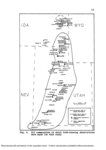
Show UTAH HISTORICAL QUARTERLY scouts, the mountain known as Naatsis’11n (Head of Earth Woman) was both part of a supernatural being and a shield that enemies could not penetrate. Even today’s chants intone thanks to Navajo Mountain: “I am spared! Enemy has missed me!” “All of us have survived! … For many more years!”6 The mountain’s power proved sufficient to hold Navajo adversaries at bay. With water from the San Juan and Colorado rivers, springs and seeps dotting its sides, wood and grass enough for man and animal, and myriad tributary canyons, the mountain and its surrounding area beckoned to those needing shelter. Hashkéneinii (Giving out Anger) was one of these. One day in the early 1860s, a rider surprised Hashkéneinii at his hogan in Kayenta, Arizona, and announced that the dust they saw on the horizon belonged to American soldiers. Further, “there were some Ute scouts among the white soldiers and we were more afraid of them than the whites, as we had always been at war with them.”7 In response to this news, Hashkéneinii and sixteen other people scattered across the desert floor and in the nearby canyons to avoid detection, reassembled that night, and with a few possessions headed north. Hashkéneinii, mounted and armed, led the party and scouted for enemies. Next he turned west, traveling through a maze of canyons until he reached the southern end of Navajo Mountain. Exhausted, hungry, and footsore along with the rest of the group, Hashkéneinii’s wife sat down and refused to go farther. The group selected a campsite, located a permanent source of water, began collecting seeds and nuts, killed an occasional rabbit, and prepared for winter. In order for their flock of twenty animals to increase, Hashkéneinii insisted that they could not eat sheep. Hashkéneinii was a taskmaster, pushing his people to work constantly, to do whatever survival required. His son recalled, “He drove everyone all day long and would never let us rest, knowing that we might starve.” For this, Hashkéneinii received his name, which translates as “Giving out Anger” or “The Angry One.” Hashkéneinii’s group remained hidden at Navajo Mountain for six years. By the time the government released the Navajos from Fort Sumner in 1868, Hashkéneinii and his family owned large herds of sheep, as well as silver jewelry made from a vein of ore he had discovered.8 Navajo Mountain thereafter became the preferred hiding spot for Navajos, Utes, and Paiutes fleeing retribution. Thus, in 1884 when word first reached Riordan and later Bowman about the defiance of Navajos who had killed two prospectors near the mountain, they were learning of the latest incident in a long string of events that played off the isolation and 6 For an explanation of traditional Navajo religious teachings concerning this landmark, see Karl W. Luckert, Navajo Mountain and Rainbow Bridge Religion (Flagstaff: Museum of Northern Arizona, 1977). 7 Hashkéneinii Biye’, cited in Charles Kelly, “Chief Hoskaninni,” Utah Historical Quarterly 21 (Summer 1953): 219–26. 8 Ibid., 221. 252 |