| OCR Text |
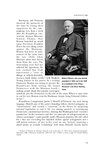
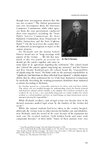
Show UTAH HISTORICAL QUARTERLY for him the two objectives went hand-in-hand. As a “dough-faced Democrat”—a northerner with sympathy for the South—he knew that he had to take action to prevent the Republicans from exploiting the Mormon issue further. These political pressures posed a dilemma. On one hand, the Democratic Party was still officially committed to popular sovereignty, but Buchanan was having private second thoughts. An early draft of Buchanan’s inaugural speech suggested the citizens of Kansas and Nebraska didn’t have power to make a decision over slavery until a state constitution was proposed, which, if adopted, would have gutted the doctrine. When Lewis Cass, soon-tobecome Buchanan’s Secretary of State, learned of these words he was furious. Cass, one the first and strongest squatter rights boosters in the country, threatened to withdraw from the new cabinet. Buchanan quickly retreated. The right to local decision-making was “sacred,” he said when actually giving his speech, “as ancient as free government itself.” Nothing could be “fairer” than to let the people of a territory “to decide their own destiny for themselves, subject only to the Constitution of the United States,” he said.93 As Buchanan now became responsible for making the government’s public decisions regarding Utah, he had to choose between this constitutional ideal—the view of the nation’s dominant political party—or respond to the rising calls being made upon him to take action against the saints. In the end, he chose an expedient path and no doubt what he felt to be the necessary one. One reason why he abandoned popular sovereignty and sent an army to Utah was the election of 1856. In the end, the Utah War had another nagging inconsistency. Many of the soldiers and government officers sent to Utah in 1857-58, who were so outspoken about the saints being traitors and successionists, would in a few short years, carry the colors of the Confederacy’s Stars and Bars. 93 132 Moore, The Works of James Buchanan, 10: 106-8fn.; also see Klein, President James Buchanan, 271-2. |