| OCR Text |
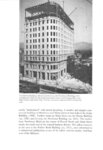
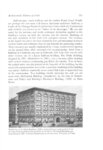
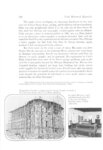
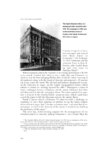
Show WINTER 2013 UHQ pp 4-90_UHQ Stories/pp.4-68 12/5/12 9:38 AM Page 40 uTAH HISTORICAL QuARTERLy day, an amount so significant that eight to nine hundred miners and mill workers went on strike, forcing the first total closure of Park City’s mines in fifty years.55 Mine owners, who blamed the strike on the IWW, refused to negotiate with the union, claiming the extremist organization did not represent the majority of miners. To monitor interaction between IWW members and more conservative miners, the Silver King Consolidated Mining Company hired the Globe Inspection Company, which had an office in downtown Salt Lake City, to send operatives to work undercover in Park City.56 The Globe Inspection Company’s reports provide further insight on how labor spies operated in the mining camps. On May 27, 1919, after spending the morning at Salt Lake City’s Union Passenger Station to meet the Butte train and observe if any known IWW union leaders or members had come to town, “Operative No. 240” boarded “the afternoon stage for Park City and upon the Opr’s. [sic] arrival in Park City he started looking for a room and getting situated there. The Opr. secured a room at the Salt Lake House. In the evening the Opr. walked around town but found everything to be rather quiet. The Opr. noticed, however, that there were numbers of men standing around and talking or walking up and down the street.”57 On the following day, the operative, who evidently was an experienced miner and was in good standing with the union, interviewed a number of men about the strike situation. “Home owners and married men of Park City say as soon as the mine owners give a 75 cent raise, they will go back. However, the majority of the miners, who are single, are more radical than the others.”58 During the next few weeks, the operative continued to make daily rounds of the train depot, Miner’s Union Hall and other known gathering places of union members, gleaning information that he forwarded to the home office. Most of the married men believe that if a secret ballot is taken on Sunday, the majority would call off the strike . . . .Operative heard no less than fifteen men complaining that the strike committee was not trying to settle the trouble . . . . This morning there seems to be a split in the ranks of the strikers, and the men are all talking about the coming meeting tonight in the American Theater. The strike committee has a type written notice posted in several places in the city and in the Union Hall to notify all loyal union members on strike to stay away from the meeting called for tonight . . . . At 8:15 p.m., just before the meeting was called to order, Opr. stepped outside and in front of 55 Hal Compton and David Hampshire, “Park City,” in From the Ground Up: The History of Mining Utah, Colleen Whitley ed. (Logan: Utah State University Press, 2006), 330. 56 Mike Ivers Papers, Silver King Consolidated Mining Company, MS 370, Box 1, Folder 8, J. Willard Marriott Library, Special Collections, University of Utah, Salt Lake City, Utah. The Global Inspection Company’s office was located in the Judge Building, which was built by Mary Judge in 1906. She was the widow of John Judge, who was a partner in the Daly-Judge Mining Company and who also worked with Thomas Kearns and David Keith to develop the Silver King Mine in Park City. 57 Ibid, May 27, 1919. 58 Ibid, May 28, 1919. 40 |