| OCR Text |
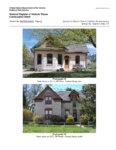
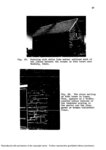
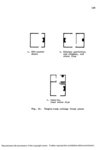
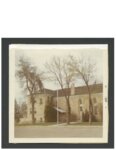
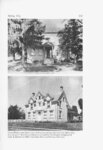
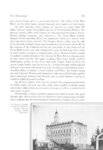
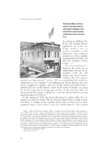
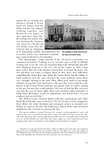
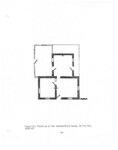
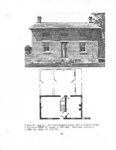
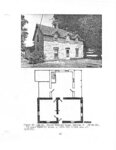
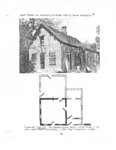
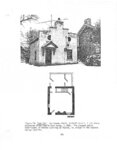
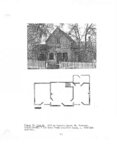
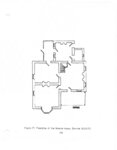
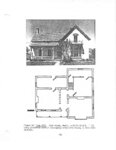
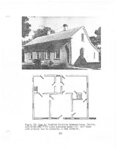
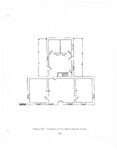
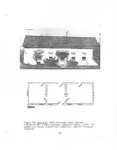
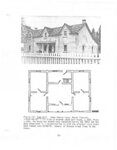
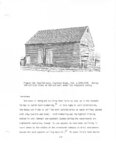
Show United States Department of the Interior National Park Service OMB No. 1024-0018, NPS Form National Register of Historic Places Continuation Sheet Section No. 8 Page 10 Spring City Historic District (Addition Documentation), Spring City, Sanpete County, UT Beck House (1879) and the Baxter House (1903) on Main Street are excellent stone and brick examples, respectively. About the corner placement, Tom Carter has noted: Such positioning created problems for house builders, however, for the corner placement gave the house two possible fronts. Many Mormon families solved this problem by using house designs that had essentially two principal elevations, one symmetrical and the other off-balance, usually with the end of the front-facing wing with a side wing at a right angle . . . The ‘houses with two fronts’ pattern becomes an idiosyncratic aspect of the Mormon town that often goes unrecognized.” 65 While this phenomenon occurs throughout Utah, the semi-rural character of the undivided blocks make this pattern, not only recognizable, but a significant and distinctive contribution to the picturesque architectural character of the historic district. The only non-domestic example is the LDS Church tithing office/bishop’s storehouse (built in 1905). While this building was one of the standardized plans produced for the LDS Church with variations extant in several small towns, the brick building’s dual porches appear specifically designed for the corner of its Spring City lot. As Spring City grew more prosperous in the late nineteenth, the number of men occupied in the building trades diversified and specialized. There was one carpenter and one cabinet maker listed on the 1870 census. In 1880, there were seven carpenters and one wood turner, along with John K. Strate whose occupation was brick maker. The 1900 census does not distinguish stone masons from brick masons but it is likely the men who do not appear in previous enumerations worked as brick masons. Marenes Larsen appeared on the 1900 census as a brick maker. Later in 1910, he was listed as a brick maker and house builder, as was Wilford Schofield. Three different families operated local sawmills during the historic period. The number of carpenters in Spring City remained around half a dozen in the early years of the nineteenth century. 66 Main Street between approximately 200 North and 200 South became a busy commercial district between 1890 and 1910, which contributes to the small-town architecture that emerged from the Incorporation and Growth Period (18701911). The blocks with frontage on the commercial district are the only blocks that were subdivided multiple times during the historic period. Approximately one-third of the historic commercial storefronts had either burned or been torn down prior to the NRHP listing in 1980, giving Main Street a more spread-out appearance than it had in the midtwentieth century. However, the only substantial change to Main Street since 1980 has been the restoration of nearly all of the commercial and public buildings. The public buildings include the frame schoolhouse with a bell tower (later city hall), the former firehouse, and the old city jail. Examples of commercial buildings include the first pool hall (1905, later Johnson Meat Market) and the Lyceum Theater (1911). The best-preserved example is the Baxter & Blain Store (1895, later Schofield’s). This unusual stone and frame building has been described as the “best surviving example of 19th century commercial architecture in Spring City.” 67 As is the case in many small towns, the buildings on Main Street corridor do not represent the bulk commercial activity during the period of significance. Many of the town’s blacksmiths, shoemakers, coopers, tinners, and wagonmakers had workshops next to their homes, several are extant as contributing outbuildings. There were a few uncommon occupations Ibid, p. 83-85. It is not clear how many carpenters in Spring City were builders. Other carpenters between 1870 and 1910 include: R. T. Schneider, Axel Fulgren, George Downard, Peter Hanson, Joseph A. Allred, Dan Beckstrom, Jens Thomasen, Christian H. Nielsen, Oren Mortensen, Louis T. Larsen, Willis Allred, Olaf Petersen, Jans Thompson, James Nelson, and Axel Erickson. 67 Peter L. Goss and Kaye Watson, “A Guide to the Architecture and History of Spring City: A National Register Historic District,” ([Spring City, Utah]: The Friends of Historic Spring City, 2007. Revised edition.): p. 37. 65 66 |