| OCR Text |
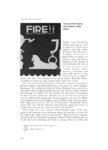
Show UTAH HISTORICAL QUARTERLY with popular sovereignty sheltering each. Willis’s resolution declared Federal power. “Resolved, That the Constitution confers upon Congress sovereign power over the territories of the United States for their government, and that in the exercise of this power it is both the right and the duty of Congress to prohibit in the Territories those twin relics of barbarism—polygamy and slavery.”30 When Willis submitted his draft proposal to the larger committee, he met two objections. First, one party leader complained that the resolution was repeating itself. Wasn’t polygamy just another form of slavery? Another objection was about style. Were the Republicans going to stoop to epithets? In the end, both complaints were swept aside, and the highly charged words, “the Twin Relics of Barbarism,” were retained as useful “instrumentalities in political warfare.” When presented to the delegates, the resolution was approved with “rapturous enthusiasm.”31 After all, Republican politicians and newspapers had been saying as much for two years, but without the catchphrase that transformed heavy political arguments into a campaign war cry. With the words sounding deep within the Republican soul, “The Twin Relics of Barbarism” became one of the more famous slogans of American presidential politics. The conventions had done their work, and now came the campaigning. The Democrats stood for preserving the Union—and the old, proven ways of their political power, which put a premium upon local and states rights and the hope of keeping the issue of slavery off the national agenda. In contrast, the Republicans were proposing the radical expansion of federal power, mainly to curb the moral evil of slavery. Somewhere in the tumult was the Mormon question, which more than one Republican warrior pressed to his bosom. According to New York Senator William H. Seward, perhaps the leading man of the party, slavery and polygamy went hand-inhand. To allow either Utah into the Union as a polygamous state or Kansas as a slave state “will bear heavily, perhaps conclusively, on the fortunes of the entire conflict between Freedom and Slavery,” he said.32 He had been making the same argument for several years.33 The New York Herald put the matter in down-to-earth tones that was typical with the newspaper: “And here comes a nice question—nicer than niggers—between Congress and squatter sovereignty. Does Congress or does squatter sovereignty cover the question of polygamy? Does the constitution reach it? What is to be done with it? The question will soon be put, and it will have to be met. . . . Utah and the saints must be looked after.”34 30 Kirk H. Porter and Donald Bruce Johnson, comp. National Party Platforms, 2 vols. (Urbana: University of Illinois Press, 1956), 1:27. 31 John W. Willis, “The Twin Relics of Barbarism,” Publications of the Historical Society of Southern California 1 (1890), 41-42. 32 “The Presidential Contest, New York Tribune, October 23, 1856. 33 Congressional Globe, 33rd Congress, 1st session, appendeix, 154. 34 New York Herald, June 17, 1856. 118 |