| OCR Text |
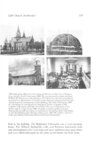
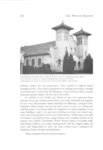
Show KINDERGARTEN MOVEMENT started to blossom in Utah. She began her first kindergarten training class in 1894. In order to provide practical training opportunities for her kindergarten courses, Elizabeth Porter launched a model kindergarten in the First Congregational Church.15 Under the direction of Alice Chapin, additional kindergartens were opened at the First Methodist and First Baptist Churches. Also in 1894, three other churches—the Methodist, The Salt Lake Phillips Congregational, and the Unitarian—started private kindergartens with the coordination of their active women.16 Beginning in 1878, LDS church women expanded the Pr imary Association as a religious organization for elementary-aged children. Two leaders of the Primary Association, Louie B. Felt and May Anderson, were actively engaged in kindergarten, participating in Alice Chapin’s 1894 kindergarten teacher training course and using the acquired knowledge to develop the Primary Association’s curriculum, as well as for starting a private kindergarten in the Eleventh Ward in 1895.17 As the kindergarten movement began in Utah, kindergarten associations were organized nationally to help promote early childhood education, and a number of educators proclaimed the usefulness and importance of early childhood education in preparing little children for elementary school. At the Congress of Women held in Chicago in 1893, two speeches addressed the importance of kindergartens: The kindergarten system is based upon the belief, laid down by the greatest authorities on education, that the most important formative period in youth is before the child has finished seven years of life, and before the regular training of the public school belongs to him by right of age. Habits, associations, desires and experiences are acquired which last through life. The faculties are developed, the senses quickened, and good behavior, discipline, self-control, manners, morals–all begin with the first awakening powers of the child.18 Women in Utah understood the importance of this duty. In January 1892, women of the Presbyterian Church organized the first kindergarten association called the Salt Lake Kindergarten Association. By this time the women’s priorities shifted from converting the LDS population of the territory to making kindergarten education free and available to the general public: “The Association felt the necessity for free kindergartens, both as an introduction step to kindergartens in the public schools and as something 15 “Reminiscences of the Beginning of Kindergartens in Salt Lake City,” 8. Salt Lake Tribune, February 16, September 9, 1894; John Sillito, “Conflict and Contributions: Women in Churches, 1847-1920” in Patricia Lyn Scott and Linda Thatcher, eds., Women in Utah History. Paradigm or Paradox? (Logan: Utah State University Press, 2005), 93. 17 For more information about the history of the LDS Primary Association, see: Carol Cornwall Madsen and Susan Staker Oman, Sisters and Little Saints. One Hundred Years of Primary (Salt Lake City: Deseret Book, 1979); Susan Staker Oman, “Nurturing LDS Primaries. Louie Felt and May Anderson 1880-1940,” Utah Historical Quarterly 49 (Summer 1981): 262-75; Deseret Evening News, December 24, 1895. 18 Virginia Thrall Smith, “The Kindergarten,” The Congress of Women (Kansas City: Thompson & Hood, 1894), 178-79.The two speeches were given by Virginia Thrall Smith and Sarah Brown Cooper. Blanche Brown, who later came to Utah to teach kindergarten training, presented a kindergarten class at the Fair. 16 137 |