| OCR Text |
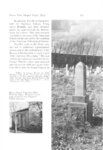
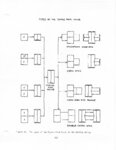
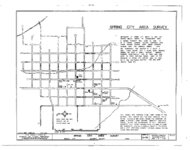
Show United States Department of the Interior National Park Service OMB No. 1024-0018, NPS Form National Register of Historic Places Continuation Sheet Section No. 8 Page 4 Spring City Historic District (Addition Documentation), Spring City, Sanpete County, UT each block. 42 Block 20 on the west side of Main Street was the site of the first fort, although no traces survived beyond the settlement period. The first log and adobe meetinghouses were built on Block 20 in the 1860 and 1863 respectively (both demolished). For many years, today’s Main Street was simply a well-worn trail between the Allred settlement and Fort Ephraim. The Spring City Pioneer Cemetery is a contributing site from this period. Criterion A: Agricultural Significance The Spring City Historic District (Additional Documentation) is significant under Criterion A in the area of Agriculture based on four factors. First, the pattern of development established in the settlement period, a compact village with adjacent agricultural lands, is still visible on the landscape. Second, remnants of the vital nineteenth-century system of canals and ditches have survived decades of progress in culinary and irrigation water improvements. Third, the town lots within the historic district have an extraordinary number of surviving agricultural outbuildings and structures, which boost of the integrity of the district. Fourth, there are several large-scale agricultural buildings and structures that were built in the twentieth century when farmers and ranchers transitioned into specialized agricultural enterprises. The large town lots originally used for family subsistence-level agricultural can be easily distinguished from the outlying agricultural fields and reinforce the agrarian patterns of a Mormon settlement town. The 1980 district nomination stated that Spring City is “typical of the Mormon village plan” in its townsite plat and its irrigation patterns. 43 As with most early Utah settlements, the historic development patterns of Spring City were partially defined by the acquisition and distribution of water. During the Settlement Period (1859-1869), the early settlers tap the natural springs and dug ditches from the Oak, Canal, and Cedar Creeks. Spring City has been described as “life under the horseshoe,” a reference to the Horseshoe Mountain with its horseshoe-shaped cirque that local farmers use to calculate summer water supply by checking the snowpack in July. 44 Throughout the Incorporation and Growth Period (1870-1911), Spring City residents completed communal water projects, including several canals: the Big Ditch (a contributing structure inside the townsite), and Point Ditch, Mill Race Ditch, and Last Chance Ditch (all outside the historic district). For many decades, the irrigation system of provided water to both the agricultural fields and the town lots. During the Civic Improvement and Specialized Agriculture Period (1912-1956), the irrigation companies made numerous improvements, including a reservoir. Piped culinary water from springs east of the townsite was installed in 1935 when the city received federal subsidies. Sturdier vehicular and foot bridges over the creeks and canal have replaced the historic ones at the same locations. Unfortunately, only a few remnants of the town lot ditches, which carried “water to each shareholder in town” as described in the 1980 nomination, are extant. 45 Nevertheless, these remnants of the historic irrigation systems are important contributors to the landscape of the Spring City. At the corner of Main Street and 100 North, a monument piping the main spring in Spring City was dedicated in 1951 to honor the importance of water to the community. The stone monument, installed by a local chapter of the Daughters of Utah Pioneers (DUP marker #158), is a contributing object. The census enumerations and other records indicate that agriculture was the primary driver of the economy for the majority of Spring City residents throughout the historic period. The early settlers were mostly subsistence farmers, 42 Jackson, p. 284. One of the most unique aspects of Mormon town planning, Joseph Smith gave no explanation for why the alternating frontage would be advantageous. 43 Spring City Historic District, NRHP Nomination Form (1980), sec. 7, p. 2. 44 Kaye Watson, Life Under the Horseshoe: A History of Spring City, (Salt Lake City, Utah: Printed by Publishers Press, Published by Spring City Corporation and the Spring City D.U.P., 1987), p. 7. 45 Spring City Historic District, NRHP Nomination Form (1980), sec. 7, p. 3. |