| OCR Text |
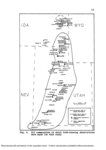
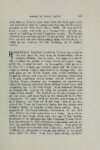
Show Valley of the Bear River 205 localities. Towns were named by settlers, people who in the main planned to stay in the region and wanted to raise monuments to themselves and identify their towns with certain causes and movements. The Mormon conflict may be seen in terms of names, with both groups showing an unimaginative penchant to name towns for luminaries among themselves. Examples that come quickly to mind include Saint Charles and Georgetown in Bear Lake Valley which did honor to Mormon stalwarts as did Woodruff, Hyrum, and Brigham City elsewhere. Similarly, Nounan, Morristown, and Bothwrell reflect Gentile leaders from one walk or another. A few names reflected aspirations or covenants held by the bestower. Such a one was Bloomington which Charles C. Rich hoped to tie to the "blossom as a rose" tradition of the Mormons. 26 Other towns took their names from physical features. Among these were Soda Springs, Mink Creek, and Logan, whose name derives from the largest affluent of the Bear River which was apparently named for early mountain man Ephraim Logan. Like Logan, the names Bear River, Bear Lake, Cache Valley, and Malad all hark back to fur trade days. Trappers found one of the West's greatest population of bears along the stream's course and at the lake. This fact ultimately outweighed the inclination to set the lake apart from the neighboring salt sea by naming it Sweetwater Lake. Cache Valley, of course, superseded the earlier Willow7 Valley after a cave collapsed upon a mountain man while he was digging to cache furs. And Malad City takes its name from a stream dubbed by French trappers when beaver meat trapped along its course afflicted all those who ate it with an extreme but passing malady. 27 Notable by their absence are Indian names. Washakie honors a great Shoshone chief and Battle Creek is a melancholy reminder of Connor's massacre. Otherwise, Indians w7ere largely ignored. This stands out in strong contrast to southern Utah which has a rich sprinkling of Indian place names, including a favorite threesome: Kanab, Kanosh, and Koosharem. If Indians were neglected as a source of names, place of origin and previous experiences w7ere not. Montpelier is said to honor the town of the same name in Brigham Young's native state of Vermont, and, of course, 20 Beal, A History of Southeastern Idaho, presents interesting information on the origin of southeastern Idaho place names. See pp. 168-86. 27 Dale L. Morgan, ed., The West of William H. Ashley . . . 1822-38 (Denver: Old West Publishing Co., 1964), p. 289. A general treatment of streams, lakes, and other natural features in the area is found in Dale L. Morgan, The Great Salt Lake (Albuquerque: University of New Mexico, 1973); specific references are found in Osborne Russell, Journal of a Trapper, 18341843, ed. Aubrey L. Haines, (Lincoln: University of Nebraska Press, 1970), pp. 3, 124, 156, and in Warren Angus Ferris, Life in the Rocky Mountains, ed. Herbert S. Auerbach and J. Cecil Alter (Salt Lake City: Rocky Mountain Book Shop, 1940), pp. 36-40, 43, 53-56, 269. |