| OCR Text |
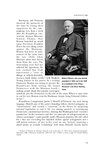
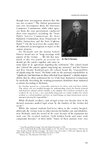
Show BOOK REVIEWS Brigham Young: Pioneer Prophet. By John G. Turner. (Cambridge: Harvard University Press, 2012. vii + 500 pp. Cloth, $35.00.) JOHN G. TURNER, a Professor of Religious Studies at George Mason University and a non-Mormon, has written a major new biography on Brigham Young. Turner’s work is the most complete, in-depth study of the Mormon leader produced in some three decades. Not since Leonard J. Arrington’s landmark 1985 Brigham Young: American Moses has there been a comparable biography. Turner’s book is significant in several respects. First, it is the most thoroughly researched biography on Young yet produced. The author carefully utilizes the vast collection of Brigham Young papers in the LDS Church History Library. He has also drawn from manuscripts and primary sources in various other libraries and archives throughout the country. Turner has effectively mined these materials, resulting in a fresh look at Young as a complex and, in some ways, conflicted individual. These documents also reveal the Mormon leader as “sincere in his faith [whose] highest loyalty was to his church and its kingdom”(5). A second major contribution is Turner’s skill in placing Young “within the context of mid-nineteenth century American religion and politics” (viii). Turner carefully discusses Young’s early activities as a struggling artisan in upstate New York, including his encounter with the “welter of religions” in the so-called Burned-Over District and his continuing struggles with “spiritual despair” as “a pious Christian seeker”(14,17, 19). All this preceded Young joining Joseph Smith’s still-fledgling Mormon church in 1832. Turner traces Young’s activities following his Mormon conversion and links his extraordinary missionary success in England to the hard times known as the Hungry 1840s. Turning to Young’s emergence as Mormonism’s principal leader following Joseph Smith’s death, the author discusses the Latter-day Saints’ problematic relationship with federal authorities relative to political developments in American society at large. These included westward expansion, sectionalism, and Reconstruction—all of which informed Young’s actions as the Mormon prophet-president. Third, Turner provides a detailed, frank examination of Brigham Young’s polygamous household. He carefully considers the changing dynamics within Young’s ever-growing family, as it evolved over some five decades. Young’s first two monogamous marriages were followed by a series of plural marriages, commencing with Lucy Decker in 1842 and ending in 1872 to Hannah Tapfield—his fifty-fifth and last wife. Turner forthrightly details Young’s dilemma in satisfying the oftenconflicting desires of these women. This was due, in part, to the fact that Young had his favorites—specifically, Emmeline Free and Amelia Folsom. 190 |