| OCR Text |
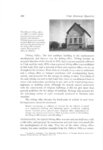
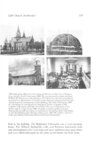
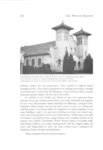
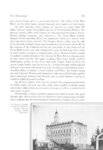
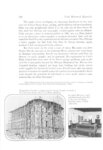
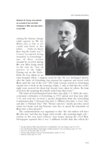
Show MORMON-CATHOLIC RELATIONS afterwards, the basic history and doctrines of Catholicism.31 Did this remarkable episode create rapprochement between Mormons and Catholics? It seems to have had little influence. The event was never repeated, and, with the dwindling of silver deposits, the Catholic presence in Silver Reef lasted only until 1885. Genuine ecumenical understanding must build upon many such outreach attempts over a long period of time. Also, the fact that this effort took place among a small group of people at the geographical frontier of both Utah Mormonism and Catholicism meant that its ripples were not likely to extend far. On the other hand, it is firmly planted in the historical memories of both churches, particularly the LDS church, whose historians have missed no opportunities to retell the story proudly. For a people so often treated as pariahs in American culture, the opportunity to extend an ecumenical gesture and to have it so enthusiastically accepted is a happy indication of the future possibilities such gestures hold.32 Although documentation of Scanlan’s episcopacy is more sparse than the historian would like, he kept much better records than any of his next three successors, Joseph S. Glass (1915–26), John J. Mitty (1926–32), and James E. Kearney (1932–7). Also, coverage of the bishops’ activities and their relations with the Mormon church dropped off to little more than pious assertions by the local press that all people of all religions loved the bishops. The lack of press interest may reflect the fact that by the time of Scanlan’s death, the existence of a growing flock of Catholics in the heart of Mormon country had ceased to be a novelty. Further, internal church matters occupied the bishops so fully that participation in public ceremonies constituted the bulk of their newsworthy activities. Bishop Glass, for one, was heavily involved with the Council of Defense during World War I and with redecorating the interior of the Cathedral of the Madeleine, while his two successors became desperately preoccupied with raising funds to retire the heavy indebtedness that Glass incurred through such ambitious projects and through a lack of financial acumen.33 Amidst the scanty documentation of Glass’s relationship with the Mormon Church, two sources give mixed signals. One—if indeed it is even credible—indicates that Glass had a close personal relationship with Heber J. Grant, president of the LDS church. This clue comes from the 31 Macfarlane, Yours Sincerely, 156; Denis Kiely, “Report to the Society for the Propagation of the Faith, October 31, 1879,” Diocesan Archives. 32 At the dedication of the Notre Dame de Lourdes church in Price on June 20, 1923, three Mormon women—June Whitmore, Edith Olson, and Mrs. L. S. Evans—provided vocal music as part of the Mass. Ronald W. Watt, City of Diversity: A History of Price, Utah (Price, UT: City of Price, 2001), 76. Since most of what happens in history never gets written down, it is impossible to know whether or how often such episodes of ecumenical cooperation occurred. But the existence of these two events in St. George and Price suggests that we might reasonably infer that other such cooperative efforts happened. 33 See Gary Topping, “Bishop Mitty’s Tough Love: History and Documents,” Utah Historical Quarterly 79 (Spring 2011): 144–63. 243 |