| OCR Text |
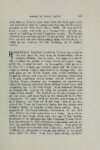
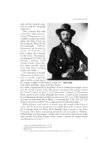
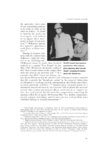
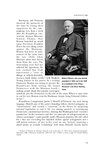
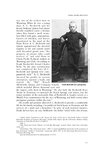
Show WALCOTT-MCNALLY INCIDENT officials asking that the remains of both Walcott and his friend McNally from Albany, New York, be retrieved for a proper burial. According to Fickey, Walcott “was one of the most quiet of men, never quarreled with anyone, was a friend of the Indians,” did not drink or smoke, “and was a man who would rather run away than fight.”18 His wife was “frantic” over the incident, and the least that could be done was to have the two men’s remains procured and brought to Fort Lewis for Christian burial. Unfortunately, Fickey, who had been in contact with Mitchell and others in the area, said that no one dared venture into that country to complete the task.19 Something had to be done, but it did not appear that Agent Riordan was the man to do it. John H. Bowman was a different kind of man. Having previously worked as a sheriff in Gunnison, Colorado, Bowman started the wheels of justice rolling toward Navajo Mountain as soon as he took charge of the Navajo Agency on June 30, 1884. Assuming responsibility for appropriate action on the ground, Bowman sent word to the miscreants that they had ten days to travel the 175 miles to the agency and give themselves up or he would assign Navajo scouts or, if necessary, the military, to apprehend them.20 Things started to happen. Colonel L. P. Bradley ordered one of the officers of the Sixth Cavalry, which operated along the San Juan River, to find the graves of Walcott and McNally, in preparation for moving their remains to Fort Lewis once the weather was cold enough to do so. He also gave directions to make a detachment of soldiers available to Bowman on request, should it be necessary to ferret out the murderers.21 At first, the military backup did not seem necessary. On July 10, within the ten-day ultimatum period, Hashkéneinii turned himself in, then traveled to Fort Wingate under guard; a day later, Little Mustache, described as a very old man still suffering from his head wound, came in with some Navajo scouts. 22 Before leaving for his incarceration, he provided a statement insisting that Hashkéneinii Biye’ and Slim Man tried to kill McNally and that he had been wounded by chance as he innocently walked near the battlefield.23 A week later, Navajo scouts brought in Slim Man, who, with Little Mustache, joined Hashkéneinii in jail at Fort Wingate.24 The effectiveness of the scouts was apparent since, according to Bowman, the “troops move so slowly that it is much easier to accomplish arrests with the scouts when the opposition is not too strong.”25 18 Fred Fickey to Jonathan Findlay, May 10, 1884, Letters Received—Navajo Agency. Fickey to Hiram Price, Commissioner of Indian Affairs, June 10, 1884; E. L. Stevens to Secretary of the Interior, June 12, 1884, Letters Received—Navajo Agency. 20 John H. Bowman to Commissioner of Indian Affairs, July 3, 1884, Letters Received—Navajo Agency. 21 L. P. Bradley to Adjutant General, Dept. of the Missouri, June 27, 1884, Letters Received—AGO. 22 Bowman to Commissioner of Indian Affairs, July 11, 1884, Letters Received—Navajo Agency. 23 Bowman to Commissioner of Indian Affairs, July 12, 1884, Letters Received—Navajo Agency. 24 Bowman to Commissioner of Indian Affairs, July 19, 1884, Letters Received—Navajo Agency. 25 Bowman to Commissioner of Indian Affairs, July 12, 1884. 19 259 |