| OCR Text |
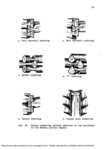
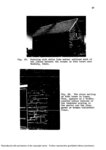
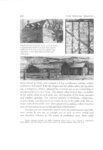
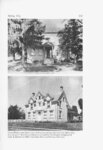
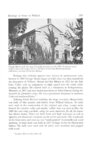
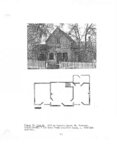
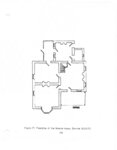
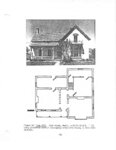
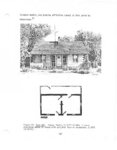
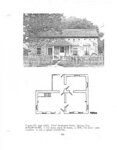
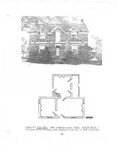
Show predated the arrival of Germanic forms, the North European log technique did not spread outside New Sweden. 28 It has been suggested recently that certain notch types, particularly the V notch, could possibly be a Germanic adaptation of primitive colonial Fenno-Swedish forms. 29 If such was the case, and the intensive type of European field research needed to firmly establish the folk origins of particular log working techniques has not yet been accomplished, the question has little relevance to this study. What is important here is that by the eighteenth century a distinctive log building tradition had emerged that was generally based upon a central European chinked wall model and that it was this type of horizontal log construction that by the nineteenth century had diffused throughout the country. 30 Not until the mid-nineteenth century was the North European fitted walling technique reintroduced by Scandinavian immigrants into the upper Midwest where it is primarily found . t od ay rn areas of I owa, 1M'rnneso·t . an d a , w·1sconsin, M.1c h.1gan. 31 As a more recent immigrant tradition, the North European technique is confined to pockets of Norwegian, Finnish, and Swedish ethnic settlement. Building in wood in the Sanpete Valley was not confined to log. Several types of frame construction were employed as well, though not in substantial numbers until after about 1880 when lumber became cheaper and more expendable. The most common type of wall framing in the valley is the balloon frame, where the walls of the house are buiit of light studs nailed to the sill and plate and held together by some type of horizontal siding (see for example figures 40 and 71). 32 Such light wall frames were often infilled with adobe for insulation purposes and "novelty" siding was the most widely used covering fabric. 11 drop 11 or Balloon framing replaced an earlier type of frame construction that consisted of 269 |