| OCR Text |
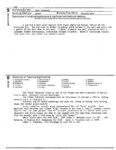
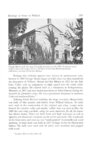
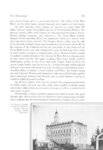
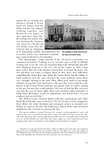
Show KINDERGARTEN MOVEMENT the house of the LDS church president Brigham Young, with the support of Brigham’s son, John W. Young. The kindergarten lasted for two years until Camilla was asked to teach older students and a qualified replacement for the kindergarten was unavailable. Later, however, with the organization of the LDS Church’s Primary Association, she returned to early childhood education and continued to be active until the end of her life. According to contemporary educators, kindergarten education was important for developing young children’s early moral and religious education. They recommended that this be accomplished by reading the Holy Bible and other religious literature. This approach was particularly emphasized in Utah, where different Protestant denominations came, beginning in the late 1860s, with a principal purpose of converting members of the LDS church from their misguided religion. Education seemed to provide the best tool for achieving this objective, especially with children and, to a lesser extent, their parents. “The schoolwork must go hand in hand with church work in evangelizing the territory,” admonished the Presbyterian journal The Earnest Worker in 1883.8 Elizabeth A. Parsons, a teacher of the Presbyterian Collegiate Institute, wrote in her reminiscences about the necessity of religious education in early childhood education: Somewhere in my reading I had learned of the new educational ideal and methods of Pestalozzi and Froebel. I was deeply impressed with the importance these two great educators laid upon spiritual development in their educational system, and I felt that their methods, if applied in this mission school [Collegiate Institute], would be a very great assistance not only to the intellectual but to the spiritual aspects of the work of this institution and the efforts in general that were being made by the Home Missions among the Mormon youth of the territory.9 The first private kindergarten owned by a Presbyterian opened on September 3, 1880, under the management of Anna Elizabeth Richards Jones and operated until 1887.10 In 1883, the Presbyterian Church began its 8 The Earnest Worker, September 1883. Archives, Giovale Library,Westminster College, Salt Lake City, Utah. “Reminiscences of the Beginning of Kindergartens in Salt Lake City, Utah.” Anne Marie Fox Felt papers, box 1, folder 4, p.1, Special Collections, Marriott Library, University of Utah, Salt Lake City, Utah. Elizabeth H. Parson and her husband were teachers at the Collegiate Institute until their retirement in 1898. Elizabeth Parson was also the matron of the boarding department at this institution. After their work in Utah they moved to Pasadena, California. J.M. Coyner, “History of the Salt Lake Collegiate Institute from its organization April 12, 1875 to May 5, 1885,” written in 1897. Copy in Archives, Giovale Library, Westminster College.The Presbyterian Church founded the Collegiate Institute in Salt Lake City in 1875. The school had both elementary and college preparatory classes. In 1897, the school began to offer college classes and changed its name to Sheldon Jackson College. This institute took up the new name of Westminster College five years later. In 1911 the school became the first accredited two-year junior college in the Intermountain area. For more information about Westminster College see: Joseph A. Vinatieri, “The Growing Years: Westminster College from Birth to Adolescence,” Utah Historical Quarterly 43 (Fall 1975): 344-61; R. Douglas Brackenridge, Westminster College of Salt Lake City. From Presbyterian Mission School to Independent College (Logan: Utah State University Press, 1998). 10 Anna Elizabeth Richards Jones graduated from the Normal Department of Iowa College in 1878. She moved to Utah with her husband, Marcus E. Jones in 1880. After closing her school, she conducted a kindergarten training school at the University of Utah during the school year of 1887-1888. Anna Elizabeth Richardson Jones, “As a Teacher,” Anne Marie Fox Felt Papers, Box 2, folder 3. The term private mainly refers to the fact that the parents had to pay tuition for the education. The private kindergartens accepted any children regardless of religion. 9 135 |