| OCR Text |
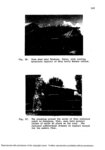
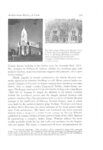
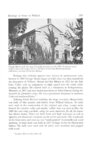
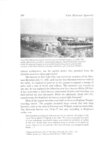
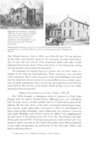
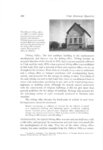
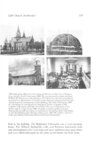
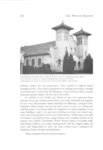
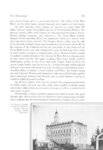
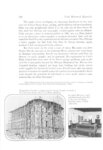
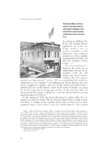
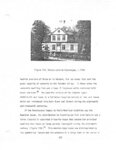
Show LDS Church Architecture LATE S E T T L E M E N T : ARRIVAL OF FOREIGN STYLES, 309 1859-69 Many communities were firmly established by 1860. Indians were more peaceful in most areas, and settlements began to expand beyond the walls of the old forts. Another seeming threat to survival, Johnston's army had slowed building progress in 1857-58, but in 1861 the army left the territory and blessed the Saints with a windfall of four million dollars worth of goods, including foodstuffs, wagons, teams, iron, and nails. Much of this material found its way into meetinghouses in the Salt Lake and Utah valleys. In the eastern United States, through which missionaries, converts, and church leaders traveled, the Greek Revival and earlier Federal architectural periods were beginning to decline. Yet, for the Utah Saints who were just coming into their own, these styles produced suitable models for the church buildings erected in the territory's more prosperous communities. Although a theocratic society, Mormons considered themselves American in every way. It is no wonder that they readily adapted the American Federal and Greek Revival styles to their own religious architecture. Although the Federal influence had declined by 1830, it was utilized to some extent in the Kirtland (1833—36) and Nauvoo (184246) temples and found its way into the earliest Mormon buildings in Utah. These buildings for the most part avoided the heavy, columned porticos and gargantuan forms but relied on the style's symmetry, formalism, and lesser details. Federal door and window types, pedimented gables, classic cornices, quoins and other details were integrated with old vernacular forms to produce a very stately and refined religious architecture. However, the best examples of the Federal style have been destroyed. The Bountiful Tabernacle, built between 1857 and 1863, represents the full flowering of the Greek Revival style in early Mormon architecture. It was built during the Romantic Era of American architecture (1820-60) when the Greek and Gothic Revival styles had their heydays. T h e Greek Revival in America evolved, like the Federal, into a distinctively American style. T h e decorative vocabulary was based upon Greek detailing, but the forms and plans were American and felt only minor influence from Europe. 16 American architects adapted the new style to the variable needs and limitations of each region. Traditional vernacular 18 Phoebe B. Stanton, The Gothic Revival and American Church Architecture, 1850 (Baltimore, Md., 1968). 1840- |