| OCR Text |
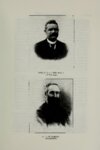
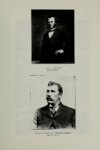
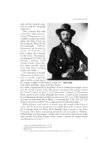
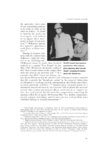
Show UTAH HISTORICAL QUARTERLY territorial assembly and, reflecting Utah’s church-state condition, also had high church office as members of the Quorum of the Twelve Apostles, second only to Young’s three-man First Presidency. Taylor’s most recent assignment was to preside over the church’s eastern missions and to publish the New York-based newspaper, The Mormon, which put him in the cockpit of the war of words. Smith, a cousin of founding-prophet Joseph Smith and the youngest apostle ever chosen for the Quorum, had Falstaffian wit and girth and the easy way of a natural politician. Both Taylor and Smith felt the heavy duty of being on a religious and political mission. They had arrived in Washington during the summer of 1856 and immediately sought the advice of Senator Douglas, who must have remembered one of his talks with Joseph Smith. Smith predicted a bright future for Douglas, including a quest for the U.S. presidency—though Smith’s prediction had come with a warning. “If ever you turn your hand against me or the Latter day Saints you will feel the weight of the hand of the Almighty upon you,” Smith reportedly had said, “and you will live to see and know that I have testified the truth to you, for the conversation of this day will stick to you through life.”44 Douglas had helped the saints many times in the intervening years, perhaps for political reasons, but the saints saw in Douglas a man whose sympathies for them ran warm and perhaps deep.45 Douglas had aided the saints’ trek west by supplying government maps and reports, and several Mormon letters since had warmly renewed the bond.46 One of Young’s letters to Douglas repeatedly called him a “friend.”47 In the first months of 1850, during the preliminaries before the Congress enacted its great sectional compromise of that year, Douglas had laid before the Senate an earlier Utah petition for statehood.48 When Taylor and Smith approached Douglas, they knew that the Mormon situation had become difficult. The “twin relics” platform, Taylor fumed, had been a “mean, dastardly act” that had used polygamy as a wedge issue against the Democrats, the Mormons’ natural political allies. Taylor complained that the Democrats, thrown back on their heels, were showing an anti-Mormon zeal that put even the Republicans “in the shade.” The Mormons had become “the great national political shuttlecock, to be bandied by every political battledore.”49 44 Church Historian’s Office, History of the Church, CR 100 102, volume 11, pp. 197-8, May 18, 1843; Brigham Young to Stephan A. Douglas, May 2, 1861, Brigham Young Office Files, CR 1234, box 5, volume 5, p. 783. 45 Poll, “The Mormon Question, 1850-1865,” 35-38. 46 Orson Hyde to the Council of the Church of Jesus Christ of Latter Day Saints, April 26, 1844, 5, Joseph Smith Papers, box 3, fd. 6, Church History Library. 47 Brigham Young to Stephen A. Douglas, April 29, 1854,Young Correspondence. 48 Poll, “The Mormon Question, 1850-1865,” 38. 49 “Report of Taylor and Smith to the Utah Legislative Assembly,” printed in Everett L. Cooley, comp., “Journals of the Legislative Assembly Territory of Utah Seventh Annual Session, 1857-1858,” Utah Historical Quarterly 24 (October 1956), 346-8; John Taylor to Brigham Young, July 12, 1856, Brigham Young Office Files, Church History Library. 122 |