| OCR Text |
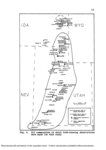
Show FALL 2013 UHQ pp 304-385_UHQ Stories/pp.4-68 9/16/13 1:25 PM Page 369 MUrDEr AND MAPPING cavalry forces to patrol the region and react to volatile situations. Although military officers and agents involved in the area were concerned with the doings of different Indian groups, they were not blind to the activities of the cattlemen, who were often more truculent than the Native Americans or settlers. Each of these groups depended on grass, water, and other resources for their own purposes. Conflict appeared inevitable. For example, the Beaver Creek incident in southwestern Colorado erupted in 1885 when cowboys massacred four men, two women, and a child in a peaceful Ute hunting camp. Naturally, retaliation came quickly. In this case, with a military presence nearby, what could have been a large-scale war turned into an abbreviated conflict soon settled. However, in more remote areas such as southeastern Utah, events could escalate rapidly, and with plentiful and easily accessible escape routes, miscreants soon disappeared. An informed military presence on the ground, with personnel who knew the lay of the land, could provide a strong deterrent to problems while decreasing the travel time for response. The possibility of creating this presence needed to be investigated. A sidelight of the Walcott-McNally incident was that of jurisdictional control. Utah, Arizona, and New Mexico were still territories that depended upon the strong arm of the federal government to influence issues too big for their own fledgling power. In the West, the Army filtered its tasks through two large entities—Division of the Missouri, headquartered in Saint Louis, and Division of the Pacific in San Francisco. Geographically, this put the Four Corners area at the extreme end of each jurisdiction. Departments subdivided the divisions. The Department of the Missouri ranged over Missouri, Kansas, Colorado, and New Mexico; the Department of the Platte held responsibility for Iowa, Nebraska, Utah, Wyoming, and parts of Montana and the Dakotas; the Department of California, one of two in the Pacific Division, controlled California, Nevada, and Arizona.2 What this meant for operational integrity was that three different departments held responsibility for some part of the Four Corners territory, and for all of them, this area was at their extreme limits. Southeastern Utah was about as far away from the geographic center of the three commands as one could get. For this general reason and in response to a host of specific incidents, military planners toyed with the idea of establishing a permanent military presence in southeastern Utah. If created, it would complement the efforts of Fort Lewis in Colorado and a number of posts in New Mexico where officials had their hands full keeping track of various Native American groups, including the Navajo and Apache. By placing a fort or cantonment in this area, the soldiers could cover a wide geographic region—the “land 2 Robert M. Utley, Frontier Regulars, the United States Army and the Indian, 1866–1891 (New York: Macmillan, 1973), 14–15. 369 |