| OCR Text |
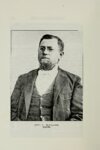
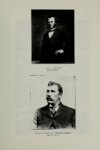
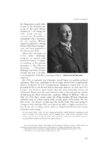
Show UTAH HISTORICAL QUARTERLY When Buchanan returned home, Pennsylvania chose him as one of its senators. He served for the next decade. Although hard-working and devoted to his political party and generally well respected, he never escaped the shadows. He was unable or unwilling to attach his name to any important piece of legislation—never becoming the center of interest or debate. He liked instead to work behind the scenes, perhaps in small groups or at one of his famous dinner parties, where he was at his best. He never hazarded himself too far on any issue, gaining the sobriquet, “Friend of the Obvious.”7 Buchanan was a perpetual candidate for the U.S. presidency, in 1844, 1848, and 1852, usually by coyly staying above the fray and “reluctantly” making himself available. One observer remarked, “Never did a wily politician more industriously plot and plan to secure a nomination than Mr. Buchanan did, in his still hunt for the Presidency.”8 Compensations came along the way. James K. Polk made him his secretary of state and eight years later, Franklin Pierce, another man who beat him out for the presidency, offered him a seat on the Supreme Court (which Buchanan turned down) before appointing him minister plenipotentiary to the Court of St. James in London. Buchanan was in London when the campaign of 1856 began. He had an unusual credential. By “freak fate,” he had always been out of Congress during the great debates over the extension of slavery and therefore carried no heavy sectional baggage. As a result, his supporters argued he could unite the Democratic party and finally carry the election. He remained properly modest. “I know. . . that you would consider me in a state of mental delusion if I were to say how indifferent I feel in regard to myself on the question of the next Presidency,” Buchanan wrote to a possible supporter. However, the next breath kept the door open. The next presidential term, he gravely warned, would likely be “the most important and responsible of any which has occurred since the origin of the Government,” which meant that “no competent and patriotic man” could shrink from such a duty.9 He was waiting in the wings. One of Buchanan’s rivals for the Democratic Party’s nomination was the “Little Giant”—Senator Stephen A. Douglas of Illinois. Aware that economic and political power were shifting to the North, Douglas and other party leaders wanted to get the slave question out of Congress where southern representatives were fighting a rearguard action for their “rights.” Douglas’s plan for sectional peace was to let the people in the territories decide on slavery for themselves. He called his proposal “popular sovereignty,” 7 Klein, President James Buchanan, 142. Ben Perley Poole as cited in Klein, President James Buchanan, 194. 9 James Buchanan to William L. Marcy, February 15, 1856, in John Bassett Moore, comp. and ed., The Works of James Buchanan, Comprising his Speeches, State Papers, and Private Correspondence, 12 vols. (New York: Antiquarian Press Ltd.,1960), 10:49. 8 110 |