| OCR Text |
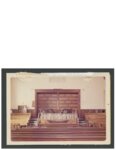
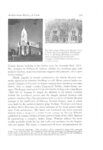
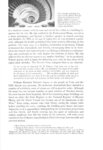
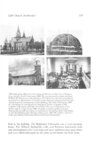
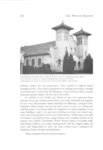
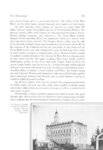
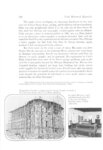
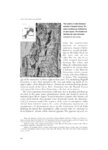
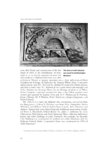
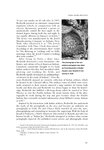
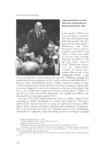
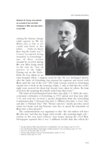
Show MORMON-CATHOLIC RELATIONS partaken of the cigars and whiskey that seem fit accompaniments to such gatherings. And yet, unless this is some kind of inside joke to which we are not privy, there seems no reason to take the letter at anything but face value. Besides, Grant was well known for his efforts to eradicate Utah stereotypes and to establish productive relationships with powerful non-Mormons outside the state.35 Looked at in that way, it is perhaps not incredible to discover him in an ecumenical role, rubbing shoulders with a Protestant minister and a Catholic bishop—even, perhaps, around a card table. However, evidence of contemporary ecclesiastical friction exists in a very public forum. When Glass redecorated Scanlan’s Cathedral of the Madeleine during World War I, he employed an array of artists in various media to transform the church from its simple, even austere, décor to the lavish display of color and intricate woodcarving that adorns the edifice today. Among the additions was a series of scriptural quotations in large gold letters across the front of the church, some of which could be interpreted as pointed theological statements. Two of them are well-known texts that the church has always cited as bases for Catholic authority: the famous “Thou art Peter” of Matthew 16:18 and “Except you eat the flesh of the Son of Man and drink his blood you shall not have life in you,” from John 6:54–5. Above the St. Joseph altar in the east transept, though, sits St. Paul’s warning from Galatians 1:8 that “Though we or an angel from heaven preach a gospel to you besides that which we have preached to you let him be anathema” could be interpreted as Glass’s scriptural basis for condemnation of the LDS religion, which Joseph Smith claimed to have received through the agency of heavenly visitors. Or perhaps not. Amidst the struggles of World War I, the press gave so little coverage of the redecoration, even in the Intermountain Catholic, that it is difficult to know what anyone made of those messages, if that is what they were. Moreover, in those days before the cultural programs and ecumenical services that have flourished since the 1993 renovation of the Cathedral of the Madeline, few Mormons would even have entered the place and been aware of the inscriptions. Altogether, the history of that edifice encapsulates, to a degree, the ambivalent relationship between Mormons and Catholics in Utah. Following Glass’s episcopacy, bishops Mitty and Kearney were so preoccupied with fundraising efforts to get out of the financial hole created by Glass’s extravagance that scant documentation of Mormon–Catholic encounters, positive or negative, remains. In the 1990s, Bishop William K. Weigand and Monsignor M. Francis Mannion successfully appealed to a wide variety of funding sources by portraying the cathedral as a “Cathedral 35 Ronald W. Walker, “Heber J. Grant,” in Utah History Encyclopedia, ed. Allan Kent Powell (Salt Lake City: University of Utah Press, 1994), 230–31. 245 |