| OCR Text |
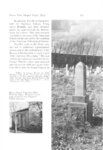
Show WINTER 2013 UHQ pp 4-90_UHQ Stories/pp.4-68 12/5/12 9:38 AM Page 16 uTAH HISTORICAL QuARTERLy Struck by the beauty of the location, with water from both a spring and a lake, “George Adair instantly declared that he meant to come back here to live.”51 According to Jones, “Adair laid claim to the entire valley by sticking up a notice to that effect by the spring.”52 Thompson proposed to call the wide, timbered valley in which the party set their camp “Adair Valley” and the nearby watering area “Adair Spring.”53 The group proceeded northeast along the heads of several deep Navajo sandstone gorges and finally emerged in a side canyon where, six years earlier—in August 1866, at the height of the Black Hawk War—a band of Indians attacked Mormon militiamen, killing Elijah Averett Jr. The Mormons buried Averett in a shallow grave. Dellenbaugh noted that “the wolves had dug out [the grave], leaving the human bones scattered all around.” Clem recorded, “We replace the remains, hoping they will not again be disturbed.”54 As the exploration stalled in Potato Valley about a week later, Thompson concluded to send Adair and two of the Powell party—Clem Powell and Stephen Jones—back “to Kanab for rations,” with instructions to “return here as soon as possible.”55 Thompson could see what is also apparent today: the Escalante drainage and the Boulder Mountain high country defy all order and logic. Given the group’s uncertainty about the trail to the Dirty Devil and the remote, daunting terrain, resupply was essential. Accordingly, on June 8, 1872, Adair, Jones, and Clem turned their faces toward Kanab leading a train of four pack horses. By the time the group reached Kanab on June 12, Adair was “quite sick.” Nonetheless, the next day they “packed 3 horses and left Kanab at 11 A.M.” By June 16, when they had traveled sixty-two miles to the head of the Paria, Jones wrote, “Adair very unwell” and “Adair very sick.” After covering thirteen miles, the men “decided to camp until morning” to permit Adair some rest. The group soon pushed on despite discomfort and inconvenience.56 For more than a week, the three-man relief party waited for Thompson, Dodds, and Hattan (the other four members of the party were to take the Cañonita down the Colorado to the Paria from the mouth of the Dirty Devil). It was “anxious waiting” as the men considered whether “the party . . . had trouble with the Indians.” On June 30, their path crossed a fresh horse 51 Dellenbaugh, Canyon Voyage, 197. “Journal of Stephen Vandiver Jones,” 129; “Journal of W. C. Powell,” 419. 53 “Diary of Almon Harris Thompson,” 79. Today, this location is just south of the Skutumpah Road in the Grand Staircase-Escalante National Monument, a few miles north of Lick Wash. There is no indication that Adair ever settled in the valley. At 6,500 feet and many miles from any settlement, the setting’s beauty was likely outweighed by the impracticality of living in such a harsh and isolated place. Not much has changed in the intervening 140 years. 54 Dellenbaugh, Canyon Voyage (1908), 197–98; “Journal of W. C. Powell,” 420–21. On events surrounding the killing of Averett, see John Alton Peterson, Utah’s Black Hawk War (Salt Lake City: University of Utah Press, 1998), 313n54. 55 “Journal of Stephen Vandiver Jones,” 132. 56 “Journal of Stephen Vandiver Jones,” 132–33; “Diary of Almon Harris Thompson,” 82. 52 16 |