| OCR Text |
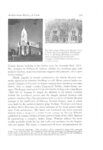
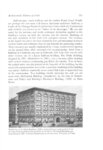
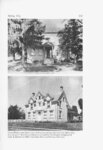
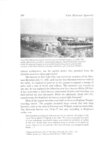
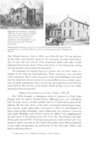
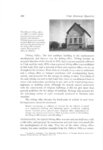
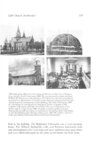
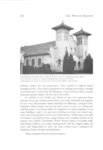
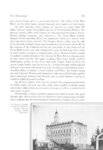
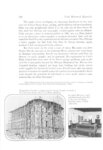
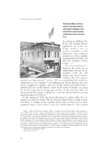
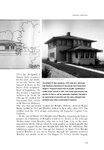
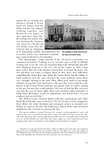
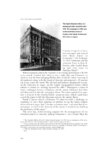
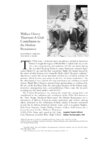
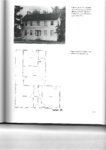
Show UTAH HISTORICAL QUARTERLY occurred at Taliesin when a deranged servant set fire to the house and then murdered Mamah Borthwick, her two children, and four others, including Emil Brodelle the thirty-year-old draftsman that took Woolley’s place. When work in Chicago declined, Woolley returned to Salt Lake City but maintained contact with the Griffin office and worked periodically on projects for the Chicago firm. He married his sweetheart Dorrit Evans on December 15, 1915. Dorrit was a musician who formally studied piano in Chicago. Within three years they moved into their new home designed by Taylor on property they owned in Gilmer Park, its living room dominated by a baby grand piano. It is there that they raised their son, Nathan and their daughter, Blossom. Woolley practiced architecture in the Chicago office of Walter Burley Griffin until 1917 when he joined fellow Salt Lake City architects Miles Miller and his brother-in-law Cliff Evans in the firm of Miller, Woolley and Evans. Miles Miller, a Utahn, began his apprenticeship in Salt Lake City in 1908. His early work consisted of schools and church buildings in Utah and Idaho. The announcement of their firm in the Salt Lake Tribune mentions the role of each of the principals: Miller in charge of the business organization and superintendence of out-of-town work, Woolley, the head designer responsible for city work; and landscape architecture; and Evans, to supervise the engineering department. Almost immediately the firm was commissioned by The Church of Jesus Christ of Latter-day Saints to undertake two large commercial projects on Social Hall Avenue in downtown Salt Lake City. It is not known whether Miles Miller was instrumental in securing these commissions, but the Belvedere Apartment building and Automotive Center showrooms along Social Hall Avenue were the largest commissions of their careers. The firm generated eightyfour ink-on-linen sheets of drawings for the apartment building and one hundred three ink-on-linen sheets of drawings for the Automotive Center. Woolley continued to do most of the residential work of the firm, including his own residence on 900 South. The firm dissolved in 1922 after the completion of the Social Hall Avenue commissions. Miller opened his own firm in 1922 and continued specializing primarily in public schools and church buildings for the LDS church in Utah and Nevada. The firm of Woolley and Evans was formed in 1922 and provided design services for commercial, religious, and residential projects. The Midwestern Prairie Style was no longer popular nationally and many architects turned to various historical styles. The firm’s first major religious commission for the LDS church was the Colonial Revival red brick Yale Ward House of 1925, not far from their own residences in Gilmer Park. In 1931 the Salt Lake City Commission gave permission to the Salt Lake City Art Barn Association to build an exhibition space in Reservoir Park. The firm of Woolley & Evans was chosen to design the facility and again used the Colonial Revival style. The Art Barn opened in 1933 with an exhibition of Utah artists picked by Woolley, a friend of many Utah artists. During that 156 |