| OCR Text |
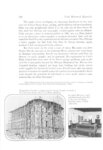
Show MORMON-CATHOLIC RELATIONS danger, but a certainty that many of our children there shall be perverted and for ever lost to the church.” On the other hand, he disclosed that simply educating Catholic children was only part of the plan—Catholics must also convert Latter-day Saint children. After observing “that there exists in the minds of non-Catholics generally, in this country, a bitter prejudice against anything Catholic,” Scanlan reported that the pious lives of the Holy Cross Sisters who established St. Mary’s Academy in Salt Lake City in 1875 made great progress “not only removing all prejudices from [Mormon] minds, but even gaining their respect and admiration.” Then came the climax of Scanlan’s report: “Hence, during the past year, many of the [Mormon] pupils expressed a desire to be baptized. I baptized about a dozen and refused to comply with the desires of many others, through motives of prudence and objections raised by their parents.”15 One respects Scanlan’s wisdom and sensitivity in refusing baptism to perhaps impressionable young minds, especially in the face of parental protest, but one must also observe that little difference existed between the motives and goals of Catholic and Protestant schools at that time. Both groups had learned that trying to shake the faith of an adult Mormon was generally a futile effort, while ministering to children—not yet so well-established in their faith—had potential. This was particularly so in the late 1870s and 1880s when public education in Utah meant Mormon ward schools; these institutions were, at best, of an inconsistent quality, while well-qualified teachers staffed the Catholic and Protestant schools. Scanlan put the matter bluntly in his 1880 report: I am more in favor of schools here than of churches because the greater my experience, the more I am convinced that, if we would strike at the roots of the great evil prevailing here, we must do it, chiefly, if not entirely, through good schools, wherein the young minds shall be impressed, at least by example, by the truth and beauty of our holy Faith, before they are enslaved by passions and false teachings. Little, comparatively speaking, can be done with the adult portion of the Mormon people. Their training, the persecutions which they fancy they have suffered for the Lord; and their whole ecclesiastical system have made them fanatics and “set in their way”; and hence, there is no reasoning with them. Those who apostatize from the Mormon faith are opposed to every form of religion and generally become spiritualists [or] down-right infidels.16 Accordingly, Scanlan and the other clergy were capable of characterizing Mormonism intemperately, referring to Utah as “this far off and all but Pagan Land,” where they found themselves “amongst a people who had transplanted in American soil, if not all, at least the most objectionable errors of Mahomet, & whose superstition, & fanaticism have no parallel in modern times. . . . surrounded by numberless Mormons, all sorts of heresies, and countless scandals.” Over time, though, close contact with those “numberless Mormons” 15 16 Scanlan to the Society, October 12, 1876, Diocesan Archives. Scanlan to the Society, November 8, 1880, Diocesan Archives. 237 |