| OCR Text |
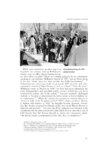
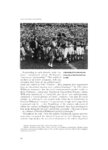
Show UTAH HISTORICAL QUARTERLY others termed him a “man of principle.” Michael Vanille wrote that the “Founding Fathers broke laws a little more serious than parade ordinances to establish freedom for all Americans.”84 The third, and most disruptive, round of anti-BYU protests erupted that fall of 1969. On October 4, some 250 protesters gathered outside the stadium at Arizona State to heckle BYU players and fans. Organized by the school’s Black Liberation Organizational Committee, demonstrators waved signs and passed out leaflets.85 A week later, Brian Walton, a BYU student government official, helped to defeat a student-backed resolution urging the WAC to sever relations with BYU.86 The next week, fourteen black players at the University of Wyoming (Laramie) asked Coach Lloyd Eaton about wearing black armbands during their game against BYU. Eaton immediately dismissed them from the team.87 During the October 18 game, the threat of violence was high. “It was just an ugly scene, one I will never forget,” recalled BYU defensive back Dick Legas.88 “It was pretty unnerving for all of us,” added quarterback Marc Lyons. “Several wives and girlfriends made the trip to Laramie, and I still remember coach [Tommy] Hudspeth telling them, ‘I wish you hadn’t come.’”89 “Many of the guys weren’t even Mormon,” Legas continued. “I had been baptized, but I was still Episcopalian in my mind. I had no problem with any ethnicity, nor did anybody that I am aware of on the team.We just wanted to play a football game.”90 BYU lost 7 to 40. Within the week, BYU student officers submitted to administrators their own proposed statement in support of civil rights and admissions.91 Wilkinson, who had hoped for an equally positive declaration from church leaders, was disappointed to learn of Harold B. Lee’s obstinacy.92 BYU staff 84 Smith, “BYU and Martin Luther King.” “ASU Demonstration Charges Racism,” Daily Universe, October 6, 1969; “ASU Report Given,” Daily Universe, October 7, 1969. 86 “BYU Leaders Fend Off Challenge,” Daily Universe, October 13, 1969; “Why Should ‘The Young Democrat’ Throw Its Support Behind Any Candidate–?,” Young Democrat, April–May 1970. 87 “Eaton Has Last Word,” Daily Universe, October 20, 1969; “Pokes Forgotten—UTEP Next,” Daily Universe, October 20, 1969; “Black 14 Becomes Black 11,” Provo Daily Herald, June 24, 1970; “Pokes Dismiss 14 Black Players for Support Anti-‘Y’ Protest,” Provo Daily Herald, October 19, 1969; see also “BYU Football: Remembering the Black 14 Protest,” Salt Lake Tribune, November 6, 2009; “Tony McGee and the Wyoming 14,” Freedom’s Journal, February 3, 2011, accessed November 28, 2011, www.freedomsjournal.net/2011/02/03/tony-mcgee-and-the-wyoming-14. 88 “Remembering the Black 14 Protest,” November 6, 2009. 89 Ibid. 90 “DB on BYU’s 1969”; see also Clifford A. Bullock, “Fired by Conscience: The Black 14 Incident at the University of Wyoming and Black Protest in the Western Athletic Conference,” accessed November 7, 2011, http://uwacadweb.uwyo.edu/robertshistory/fired_by_conscience.htm; James E. Barrett, “The Black 14: Williams v. Eaton, A Personal Recollection,” accessed October 26, 2011, http://uwacadweb.uwyo.edu/robertshistory/barrett_black_14.htm; Lane Demas, Integrating the Gridiron: Black Civil Rights and American College Football (New Brunswick, NJ: Rutgers University Press, 2010), 102–33; “Football, Racial Issues—Then Understanding,” Salt Lake City Deseret News, October 22, 2009. 91 “BYU Student Officers Turn in Positive Civil Rights Statement,” Salt Lake Tribune, October 23, 1969. 92 Wilkinson, Diary, October 27, 1969; see also October 29, 1969. 85 218 |