| OCR Text |
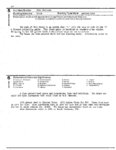
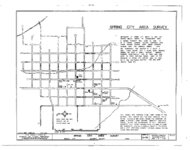
Show 26. Olsen, "Zion," 23. 27. The best general description of the building of the Manti Temple is found in Andrew, The Early Temples, 174-190. See also, Paul L. Anderson, "William Harrison Folsom: Pioneer Architect," Utah Historical Quarterly, 45:3 (Summer 1975) : 252-259. -28. See Fernand Braudel, On History (Chicago: University of Chicago Press, 1980), 29-30. 29. See Arrington, Great Basin Kingdom, 235-379. 30. Ibid., 340-379. 31. Antrei and Scow, The Other Forty-Niner's, 38-39. 32. This pattern is particularly apparent in Spring City, where after 1890 several leading polygamists built small dwellings for their plural wives to avoid the implications of cohabitation. See Tom Carter, Spring City Historic District, National Register of Historic Places Inventory-Nomination Form, Utah State Historical Society, 1979. 33. The emergence of downtown commercial districts in the valley is documented in Allen Roberts, The Mount Pleasant Commercial District, National Register of Historic Places Inventory-Nomination Form, Utah State Historical Society, 1978, and Tom Carter, Ephraim Main Street Historic District, National Register of Historic Places Inventory-Nomination Form, Utah State Historical Society,· 1978. 34. Se~ Charles S. Peterson, "The 'Americanization' of Utah's Agriculture," Utah Historical Quarterly, 42:2 (Spring 1974): 108-125. 35. The livestock boom of the late nineteenth century is chronicled in Everett H. Mecham, "The History of the Sheep Industry in Utah" (Master's Thesis, University of Utah, 1925). 36. Jenson, History of the Sanpete Stake. 37. Seventh Census of the United States, Population of the. United States in 1850 (Washington, D.C.: Government Printing Office), Eighth Census of the United States, Population of the United States in 1860 (Washington, O.C.: Government Printing Office, 1964), and Population and Social Statistics of the United States in 1870 (Washington, O.C.: Government Printing Office, 1872). 38. Manuscript Census of the United States, 1870. 84 |