| OCR Text |
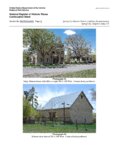
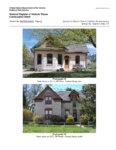
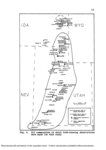
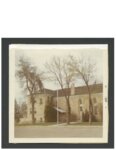
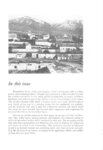
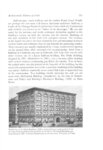
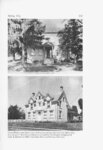
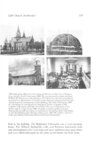
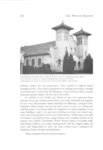
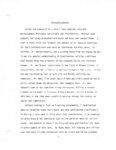
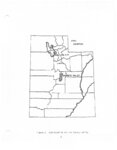
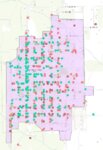
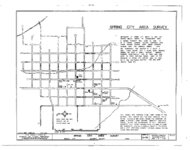
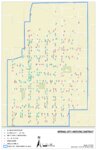
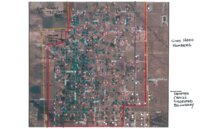
Show DESCRIPTION CONDITION CHECK ONE CHECK ONE __EXCELLENT _DETERIORATED .-UNALTERED. " - _&DRIGINALSrTE JGOQD _FAIR -RUINS _UNEXPOSED .^ALTERED _MOVED DATE. Spring City is one of eleven still existing settlements located in the upper Sanpete Valley of central Utah. Each of these settlements figured in the overall colonization of the area by members of the Church of'Jesus Christ of Latter-day Saints in the years after 1849.! Mormon town planning in the Sanpete Valley closely followed an agricultural village system advocated by the L.D.S. church leadership. 2 By this design, dwellings were clustered together in towns which in turn were surrounded by individual farm holdings. Such a village living arrangement strengthened church authority/ fostered communitarian activity, and facilitated the defense of the population against Indian attack. Villages were platted into 5-8 acre blocks with each family generally receiving a quarte^^locJcjallG^en^ On; this townsitey? : the Sanpete faj:m family, erecte^a ,a c^iifog ^oj^ necessary outbuildings.. While^all eleven G^mmunitiesnin ithe upper Sanpete Valley are the products of this system of farm planning, Spring City best represents the original nineteenth century character of the settlements. 3 Spring City lies in the northern half of the Sanpete Valley about seventeen miles north of Manti, the Sanpete County:seat. U.S. 89, the principal route through the valley^ bypasses the town one,mile to the west. Ihe town is tucked up beneath the Wasatch Plateau which rises dramatically on the eastern perimeter of the town. A line of low lynig limestone hills to the south and west effectively cut the town off from the larger valley. Hie current population is 450. With its wide streets and square blocks. Spring City is typical of the Mormon village plan. The historic district boundaries are coincident with the city J,uni,t$. and enclose about, ninety-five blocks and three hundred and six structures. Of the total number of sites and structures, 337 or 76 percent contril^ter^tp, the^ nineteenth early-»twentieth century village character of the town. Individual structure site forms accompanythis nomination; In keeping with the religious nature of the town, Spring City is dominated by a large L.D.S. Meetinghouse (SP-17-75). Ihis elegant stone structure was built in 1900-1914 and replaced an earlier building. In 1973 a stone wing was added on the north of the structure. This addition was designed to match the character of the original building and does not detract from the historical integrity of the Church. Other buildings in the district which display the prominent role the L.D.S. Church played in the town are the Bishop's Tithing Office (SP-17-137), the Endowment House-School House (SP-17-33), and the Relief Society Granary (SP-17-32). QrsqnJiyde, one ,of ,the Iwelve Apostles of the L.D.S. Church, resided in Spring City (SP-17-67). Other homes of local church leaders are the Jacob Johnson house (SP-17-24) and the James A. Allred House 1SP-17-71). |