| OCR Text |
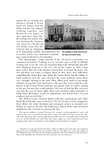
Show Little Scandinavia 163 Shimmy Soren and Shingle Pete are lamenting the childless state of their good neighbors, Brother and Sister Nielsen. "Shingle Pete, issn't it yoost too bad d a t poor Sister Nielsen iss unbearable." " O h , now Shimmy Soren, you shouldn't say d a t about sveet Sister Nielsen. D u vis d a t effery v u n luffs her, so unbearable cannot be de right vord. It is better you should say d a t she iss inconceivable.'" " O n , no, Brodder Shingle Pete, ve all know d a t Sister Nielsen c a n n o t haf any little vuns, so her condition is not inconceivable. I belief de right vord ve vant in dis situation is to say dat she iss impregnable"*2 But the dialect stories from Utah's Little Scandinavia, though similar to dialect stories told elsewhere, also differ from them, even from those told elsewhere in the Mormon West. The following story comes from Malad, Idaho, where the majority of the settlers w7ere Welsh and where any Scandinavians were in a distinct minority: A certain bishop noticed some contention between a Welsh a n d a Danish brother in his congregation, so he called the good Danish brother into his office a n d said, " W h a t ' s the problem here between you and Brother J o n e s ? " T h e Danish brother replied: "Vel, d a t old Velshman called m e a Danish s. of a b. Now, vouldn't d a t make you upset with h i m ? " T h e bishop replied: " N o it w o u l d n ' t bother me at all; I'm not Danish." Whereu p o n the Danish brother defensively asked: "Vel, den, vat if he called you d a t kind of s. of a b. vat you are?' M : i The humor here arises, of course, from the conflict between opposing ethnic groups. Other dialect jokes grew either out of the settlers' attempts to accommodate themselves to strange American ways or, at times, from character traits of the immigrants themselves. But although these themes can be found in the Sanpete-Sevier jokes, the funniest and most revealing stories come, I believe, from tensions in the struggle to accommodate oneself to the demands of Mormon church membership. This point supports my earlier contention that Scandinavian immigrants to the area became not English or Yankees, but Mormons. The jokes, however, suggest that the transformation was not always easy. To say this is not to say that the people of Little Scandinavia were not good Mormons; it is merely to suggest that the people used humor as a safety valve to laugh at their problems and to give release to pressures that might otherwise have been their undoing. In spite of all the stories telling of help received from the Three Nephites and of divine intervention in times of trouble, the Scandinavian settlers, faced with the struggles of day-to-day living, must have wandered 42 Woodruff C. Thomson, "Ephraim Stories: T h e Tellers and the Telling" (Paper read at Annual Meeting, U t a h State Historical Society, Ephraim, U t a h , September 13, 1975), p. 12. 41 Sherrie Sorensen, Malad, Idaho, 1977. |