| OCR Text |
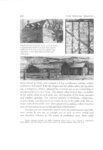
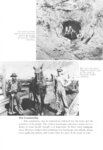
Show 156 Utah Historical Quarterly God and under his direction. Years before the temple was even begun, a young man, later destined to become the temple president, supposedly saw the completed temple in a vision.17 Once the construction was underway the people donated the eggs their chickens laid on Sunday to help pay for the work. T h e chickens themselves, as one informant pointed out, "entered into the spirit of the thing" and laid more eggs on Sunday than on any other day. 18 T h e men who worked on the temple, some of them in dangerous tasks, were evidently protected by divine providence since in the eleven years of construction none was killed and few received injuries more serious than a broken ankle. 19 In the construction of the temple, these men, many lacking the requisite skills and all of them lacking the necessary tools, managed to build walls so straight that later builders and engineers marveled at their accomplishment. 20 When a temple guide was once asked what kind of instruments were used, he replied that he could remember only one, a spirit level, with emphasis on the spirit. 21 Getting enough water for the temple was, as the following story makes clear, also regarded as a providential act: T h e water for the temple is a miracle in itself. W h e n the site was first dedicated for the temple, many people wondered how and where they would get water to pipe to the site. T h e hill it is on is nearly solid stone with very little indication of water except for a small trickle, not even enough for a small cow, coming out of the rock in the hillside. T h e people h a d drilled into the rock for irrigation and livestock purposes but never more than a trickle could be coaxed from the stone. After m u c h prayer, drilling was tried again, but this time a stream of pure water burst from the rock, and it is this water that has been used for the temple and it has been used ever since.-- According to some informants, as the need for water has increased, so has the spring's flow.23 When the temple was finally completed, some of those at the dedication ceremony heard the voices of a heavenly choir, a sort of divine benediction on what had been accomplished. 21 Attendance at the dedication was so important to the people that some, according to tradition, even received help from the Three Nephites in order to be there: p7 Larry Johnson, Provo, U t a h , 1972; Hargis, "Folk History of the Manti Temple," pp. 53-54. 1S Marilyn Heiner, Provo, U t a h , 1970; Hargis, "Folk History of the Manti Temple," p. 65. Hargis, "Folk History of the Manti Temple," p. 6 1 . 20 Ibid., pp. 71-72. 21 Ibid., p. 72. " V a l e r i e Hall, Manti, U t a h , 1970. 23 Hargis, "Folk History of the Manti Temple," p. 60. 24 Ibid., pp. 69-70. 111 |