| OCR Text |
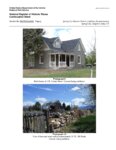
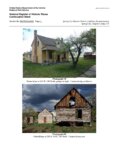
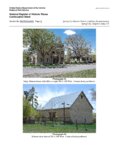
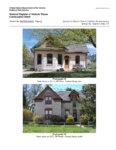
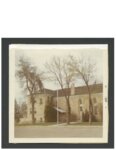
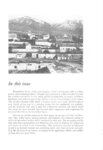
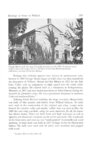
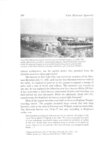
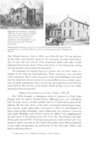
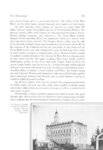
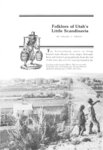
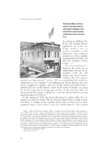
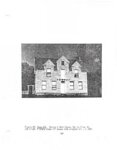
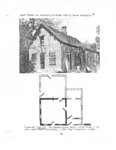
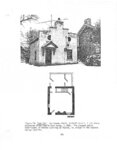
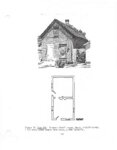
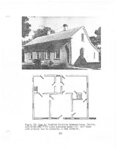
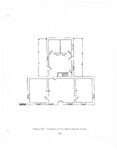
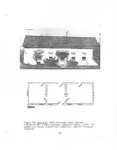
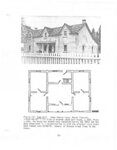
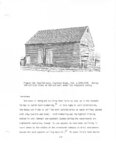
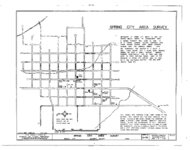
Show Stone Buildings of Beaver 279 As other people have commented about other places in Utah, 1 Beaver City cannot be seen, let alone appreciated from the speed and glare of the interstate; and few, if any, of the city's stone houses can be seen at all from the freeway. After locking at other towns in the county, mostly mining and railroad boom towns—mere shantytowns despite their "modernization"—one is forcefully impressed with the solidity of Beaver City: the abundance of heavy stone and red-brick buildings many would call "old pioneer" and the clean, logical, symmetrical planning of the town itself. Beaver is, in fact, a stone oasis in a desert of wooden shanties. Henry Glassie, one authority on material folk culture in the United States, has said: ". . . the telling of a tale and the building of a wagon are frequently repeated parallel culminations of culturally determined knowhow. T h e wagon type would not have to be invented, nor the tale type composed, by the group whose traditions incorporate that form, but a tale told or a wagon built by a person who does not have that tale or wagon as part of his own tradition cannot be folk." 2 Glassie's statement should adequately explain why the folklorist would study the stone buildings of Beaver and not the architecture of the new Chevron station. Since the book from wdiich this quote was taken devotes roughly half of its entirety to the study of houses and house types, one can substitute the word house or building for wagon in Glassie's paragraph and assert that folk architecture and building is as important and viable an act of the folk as the transmission of a tale—long or short. But possibly more important: the stone buildings of Beaver were and are part of the tradition of the folk, a specific group of people; and studying those traditions, here and now, could very well bring one closer to an understanding of the people that perpetrated them and, ultimately, closer to an understanding of ourselves. Folk building traditions were, in Beaver, as in other parts of Utah, a marriage of folk culture directly transplanted from northern Europe and an earlier United States culture, also brought from Europe but transDr. Poulsen is an assistant professor of English at Brigham Young University. See Austin E. Fife, "Stone Houses of Northern U t a h , " Utah Historical Quarterly, 40 (1972) 6-23. Richard V. Francaviglia, "Mormon Central-Hall Houses in the American West," Annals'of the Association of American Geographers, 61 (1971), 6 5 - 7 1 . Francaviglia, " T h e Mormon Landscape: Definition of an Image in the American West," Proceedings of the Association of American Geographers, 2 (1970), 5 9 - 6 1 . Paul Goeldner, " T h e Architecture of Equal Comforts: Polygamists in U t a h , " Historic Preservation, 24 (January-March, 1972), 14-17. Peter Goss, "Utah's Architectural Heritage: An Overview," Utah Architect, 52 (1973), 14-17. J.E. Spen'ser, "House Types of Southern U t a h , " Geographical Review, 35 (1945), 444-57. See also J a n Harold Brunvand, "A Survey of Mormon Housing Traditions in U t a h , " Revue Roumaine D'Histoire De L'Art, 11 (1974), 111-35. 2 Henry Glassie, Pattern in the Material Folk Culture of the Eastern United States (Philadelphia, 1 9 6 8 ) , ' 5 . 1 |