| OCR Text |
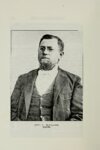
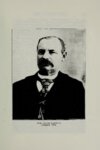
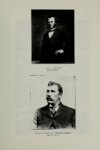
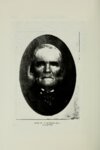
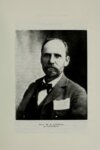
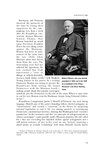
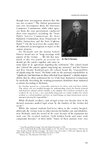
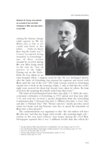
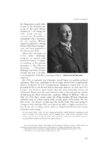
Show ELECTION OF 1856 Captain John Gunnison, along with a half dozen of Gunnison’s men. Although the Indians had attacked the troopers for the killing of one of their leaders by emigrants a few weeks before, many easterners put the blame on the Mormons.18 Some non-Mormons in Utah, whom Utahns called “Gentiles,” agreed, and they said the Mormons were trying to turn the Indians against the nation. It is not clear what motivated the anti-Mormons. Some were put off by Young, others by nothing more than an anti-Mormon scorn. Still others were unscrupulous opportunists, who hoped for government contracts if power shifted away from the local people.19 Some opposition reflected the delicate insecurities of Americans themselves.20 On the other hand, some argued on grounds of principle and vision. They believed that the Mormons, with their polygamy and theocracy, did not fit into the usual American mold—Utah seemed too seventeenth-century Puritan, too odd and anxious, and too millenarian. These men, in and outside of Utah, believed the nation had to bring the saints under control. By the beginning of 1856, Utah’s delegate to Congress, John M. Bernhisel, knew that the opposition to his people was strong and growing. Bernhisel, an unassuming and temperate man, was everything that the supposedly fanatical Mormons were not. He had been trained as a medical doctor at the University of Pennsylvania and once served as Joseph Smith’s physician and attaché. He had an another advantage: He was a one-wife man and a reluctant one at that—he had waited until the age of forty-six to marry. His quiet diplomacy had won many friends in Washington, and when necessary he could speak his mind to President Young, although always in his quiet and well-spoken way. Bernhisel began the year with a public letter to the Washington Union, the Democrats’ party newspaper. A simple visit to Utah’s “longitudes,” Bernhisel said, would quickly dispel any idea that the Mormons were disloyal. Nor was there truth about Young’s publicized statement that he intended to remain as Utah’s governor, whatever the costs. Bernhisel said Young had merely expressed his “devout submission to the Providence which rules all created things” (Young’s belief in providence at least equaled Buchanan’s). Finally, he denied rumors that Utah had thirty thousand under arms (another report Bernhisel cited said seven thousand “disciplined” troops), although the territory, like most American communities, had a 18 David Henry Miller, “The Impact of the Gunnison Massacre on Mormon Federal Relations: Colonel Edward Jenner Steptoe’s Command in Utah Territory, 1854-55" (Master’s thesis, University of Utah, 1968); Ronald W.Walker, “President Young Writes Jefferson Davis about the Gunnison Massacre Affair,” Brigham Young University Studies 35 (1995) 146-70. 19 Thomas G. Alexander, “Conflict and Fraud: Utah Public Land Surveys in the 1850s, the Subsequent Investigation, and Problems with the Land Disposal System,” Utah Historical Quarterly 80 (Spring 2012): 108-131. 20 J. Spencer Fluhman, “A Peculiar People”: Anti-Mormonism and the Making of Religion in NineteenthCentury America (Chapel Hill: University of North Carolina Press, 2012). 21 Washington Union, January 4, 1856. 115 |