| OCR Text |
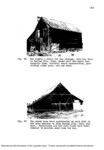
Show WALCOTT-MCNALLY INCIDENT actions and on the importance of the 1874 Grass Valley killings, while also emphasizing a number of other cultural points important to the Navajos. Although this interview took place well over one hundred years after the incident and conflicts at times with the written record, the oral tradition has preserved much detail. Canyon: The name !t’7n7 came from a man named Hastiin !t’7n7, my paternal grandfather. He got that name because he was blamed for killing some white men. While he was being hunted, they [the government] asked, “Where is the one who did this killing?” and the people said, “He is the man, he is the one who did it.” A group of soldiers came out to arrest him. They asked him why he killed these white men, and he told them because these white men had killed six [three] innocent Navajo people. These Navajos had gone to trade and sell with some white traders in a place called “Dzi[ Binii’ {igai” [Mountain with White Face] somewhere north of Navajo Mountain. These Navajos had taken with them many tanned hides, rugs, saddle blankets, and jewelry in trade for some nice horses. They got what they came for and started on their way home. It was sundown and very cold, so they decided to camp near Mountain with White Face. Here they found some old barns stocked with hay. They thought this would be a good place to keep warm. As they were settling down for the night, a couple of white men came by on their horses. The two men said it would be all right for them to stay inside for the night. Inside they found a wood stove and a pile of wood. “How nice of them. How can we refuse the offer?” they said. Neither side understood each other, but they were able to communicate through hand gestures. They were given some drinking water and some hay for their newly acquired horses and were grateful for the hospitality. Before dawn the next day, one Navajo man went out to get his horse, but realized that something strange was going on. He became suspicious when he saw that some white men were outside not too far from them warming up and loading their guns by a fire. He came back inside to warn the others, who were still resting. “Don’t be alarmed,” one of them answered. “They were very nice to us last evening; don’t worry about them.” But the man was afraid, so he went back out and saddled his horse and rode out a ways, pretending to act normal. The moment he took off galloping, he heard gunshots ring out in the barn. As he rounded the corner of the mesa, he was shot in the arm but managed to escape. The white men hunted for him for about a week but failed to find him. He survived for two weeks in the wilderness, treating his wound with natural herbs and drinking some [of a potion]. He crossed back over the San Juan River and went to see Mister [Hastiin] !t’7n7 to tell him what had happened. Mister !t’7n7 was furious. When Mister !t’7n7’s captors asked him why he had killed the soldiers [prospectors], he replied, “How can I forgive these white men? Our people cannot be replaced! They have murdered my uncle, who was a great medicine man. He used to sing the sacred Na’at’oyee Bik2’j7 (Shooting Way—Male Branch), N7[ch’ij7 (Wind Way), and the H0zh==j7 (Blessing Way). He was also teaching me how to become a medicine man. For this very reason, I promised myself that I would have no mercy for any white man who strayed in our territory from that day onward. No matter what condition they were in, I was going to kill them too. The white men did the killing first—two great medicine men and some people—then took their horses. So they are at fault, not me. But yes, I am The One Who Did It (!t’7n7).” He met with his captors at T0 Deezl7nii (Where the Stream Begins). The case was finally settled in that six [three] Navajos and two white men were killed, so that was just the same. That is how the name !t’7n7 came about.39 39 Betty Canyon, interview by Robert S. McPherson and Marilyn Holiday, September 10, 1991, in possession of the author. 265 |