| OCR Text |
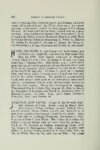
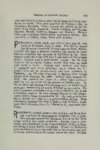
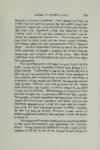
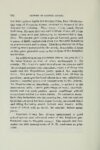
Show Book Reviews and Notices Great changes were in the offing for the M o r m o n people at the time the Kanes visited U t a h . Only subtle hints of these undercurrents surface now and then in Mrs. Kane's narrative. I n just five years Brigham Young would be dead and his people on the threshold of an uncertain future. But Mrs. K a n e To 329 captured much of the essence of what Mormon society was then and still is in great measure even today. D O R O T H Y Z. MORTENSEN Editor, President's Advisory Council on Historic Preservation Washington, D.C. Utah With the Dragoons and Glimpses of Life in Arizona and California, 1858-1859. Edited by HAROLD D. LANGLEY. (Salt Lake City: University of U t a h Press, 1974. xvi + 230 pp. $8.50.) This volume contains twenty-five letters, written by an enlisted soldier in the U t a h Expedition, that were first published in the Philadelphia Daily Evening Bulletin during 1858-59. T h e letters from " U t a h , " the pseudonym the correspondent used to identify himself, are valuable for the descriptions they offer of army life; for a critique of the life, times, and politics of that era; and for a firsthand analysis of Mormons and Mormonism. T h e editor, Dr. Harold D. Langley, is the assistant curator of the National Museum of History and Technology. His research is very well done in the area of military life and individual soldiers. These letters give an excellent picture of the life of this antebellum soldier, including the antics of an eleven-year-old drunk d r u m m e r boy, numerous references to soldiers who took "French Leave," and punishments and discipline procedures, including being "bucked and gagged." " U t a h " also appears to have been very aware of national politics and often is openly opposed to old "Buck" (James Buchanan) . His assessment of Mormonism and particularly polygamy is a most important part of the volume. " U t a h " suggests that one reason Buchanan has sent the army to U t a h is because he (Buchanan) "having lived so long without getting a wife, is envious of Brother Brigham's success among the ladies and takes this mode of venting his rage" (p. 2 1 ) . " U t a h " seems to anticipate some of the comments of M a r k Twain when he writes: Their women, however, did not strike me favorably, coming as I do from the good old Keystone State, where a homely woman would make the fortune of Barnum. Of nearly a hundred and fifty, there was not one among them who would not come under the head of—well, ugly is an unpleasant term to apply to the fair sex, but I must tell the truth. At home I know at least a dozen fair damsels whom I would have no objection to bring under the Mormon doctrine; but if these I met are a specimen of Mormon beauty, one is more than I want. The men, on the contrary, were fine looking fellows . . . with neatly trimmed black whiskers and moustaches—there was not a bare-faced man in the crowd (p. 6 6 ) . Thus " U t a h " writes of U t a h with his own biases in view. Some small errors are evident in this volume: Leonard Arrington is not of the University of U t a h (p. 15) ; the M o n n o n church moved to Kirtland, Ohio, in 1831 rather than 1833 (p. 3) ; a n d Willard Richards, rather than Albert Carrington, established the Deseret News in 1850 (p. 115). I n the final chapter, Langley examines the membership of the dragoons in order to establish the identity of " U t a h . " This chapter brings to a fine conclusion a delightful series of letters. R I C H A R D W. SADLER Associate Professor of History Weber State College |