| OCR Text |
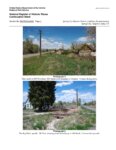
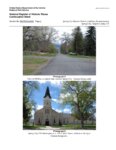
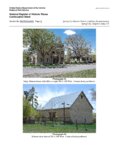
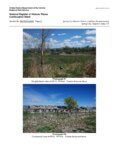
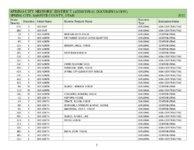
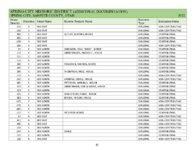
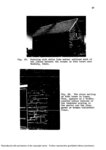
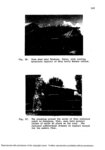
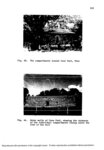
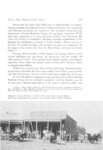
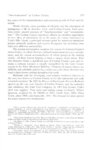
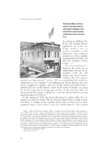
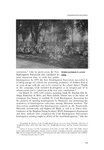
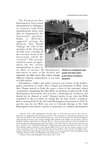
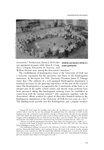
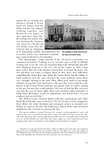
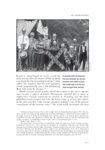
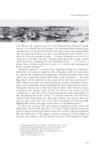
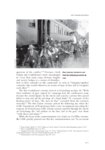
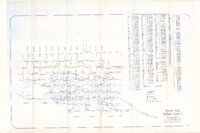
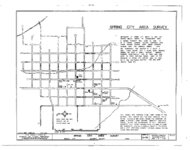
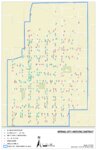
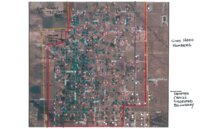
Show United States Department of the Interior National Park Service OMB No. 1024-0018, NPS Form National Register of Historic Places Continuation Sheet Section No. 7 Page 4 Spring City Historic District (Addition Documentation), Spring City, Sanpete County, UT the visual impact is minimal. A system of piped culinary water from the springs east of town was not installed until 1935 when federal subsidies were available to fund municipal projects. The most distinctive characteristic of Spring City’s historic development are the uniformly square blocks, the streets that divide them, and the placement of the buildings that occupy them. In 1852, one hundred acres of the settlement was divided into five-acre blocks. A second survey was performed in 1857, but only shows the settlement as an abandoned village. The first official townsite survey was completed in 1859 when the settlers returned to the area permanently. This survey included 640 acres of adjacent farmland. This survey grid is still visible in the city’s streetscapes and landscapes. Soon after Spring City was incorporated in 1870, the seven north-south streets and eight east-west streets were named by city ordinance. 8 A second city plat was drawn in 1888 and accepted by city in 1891. It was likely at this time the east west streets were renamed First through Tenth (with Main Street as Third Street), and the east-west streets were designated by the letters “A” to “N” extending the townsite to the current city limits. It was not until June 2, 1976, that the City Council officially changed street names to the current names using Main and Center as the origin point. For example, First Street became 2nd West (or 200 West) and “A” Street was renamed 4th South (or 400 South). 9 Although Spring City looks tidy on paper maps, on the ground the town still feels very rural. Address numbers were not commonly used until the 1990s with the original district nomination map using site numbers. 10 Spring City’s 80-foot-wide streets are another characteristic of a typical Mormon village. In 1913, a concrete sidewalk project was completed along Main Street. It would be sixteen more years until the street was paved. Today Main Street is the only street in town that is paved with asphalt for its full width and features a full complement of sidewalks, curbs, and gutters [Photograph 2]. An examination of aerial photographs from the 1930s to the 1960s shows unpaved streets with a few sidewalks along the blocks near Main Street. The same aerial photographs show that in the east and north sections of the townsite, there is little to no development and many of the streets appear as meandering footpaths. Several streets that existed on paper are missing completely in the historic aerials. At the time of the 1980 listing, most of the city streets remained unpaved dirt or gravel. Today approximately two-thirds of the city streets are paved with recycled asphalt; however, with the exception of Main Street only the center of all Spring City streets are paved, with widths of asphalt varying from 25 to 35 feet, leaving between 20 to 30 feet of unimproved shoulder on either side [Photograph 5]. In a few cases, the pavement has followed historic usage with some intersecting streets offset. Most intersections have been paved with curves accommodating the common practice of cutting the corners of the excessively wide streets. A 2021 aerial photograph shows that in the formerly undeveloped parts of the city, some of the footpaths have been widened and straightened to accommodate new construction, but the streets remains unpaved, covered with red dirt, and mostly serve as a driveway for one or two residences. In several places, the old footpaths still remain between the blocks and sometimes a fence line indicates where a street exists on paper only. Starting at the west side of town from First to Seventh, the north-south streets were named Parley, Washington, Main, Jackson, Fifth, Johnson, Polk, and East. Starting at the south end of town from First to Eighth, the streets were named John’s, Mill, Hyde, Dallas, Chestnut, Douglas, Walnut, and Mulberry. Kaye Watson, Life Under the Horseshoe: A History of Spring City, (Salt Lake City, Utah: Printed by Publishers Press, Published by Spring City Corporation and the Spring City D.U.P., 1987), p. 35. 9 The 1934 city waterworks map includes all three street names with the current designations added later in a different hand. The map also includes a notation for “Spit’n Whittle Ave” along 100 North between Main and 100 East. 10 A 1990 update of the district map includes a table to convert the site numbers to addresses. The 1999 survey map uses only the address numbers. 8 |