| OCR Text |
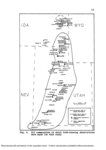
Show 118 Utah Historical Quarterly the regular caravans also raided the small Southern Paiute bands for children to be sold as domestics or slaves in both California and New Mexico. 27 Not only did this slaving decimate the local Indian tribes, but in time it produced a reaction in the Mormon settlers that resulted in a territorial indentured servant law allowing Mormons to purchase Indian children and raise them in their homes, as many Dixie Mormon families did. Mormon men, including Jacob Hamblin and Dudley Leavitt, also married Indian girls so raised. 28 Quite incidentally, an additional Spanish influence was insinuated into Utah's Dixie. In about 1585 the Spanish monarch had sent the recalcitrant Hopi Indians some red-meated cling peaches which they planted and cultivated successfully. Some of their peach orchards can be seen today in the valleys below the mesas. When Jacob Hamblin first contacted the Hopi in 1858, he tried, as had Catholic clerics before him, to convert the Hopi. He, like they, was unsuccessful. But Jacob liked their red peaches and brought some back to Dixie and planted them. 29 And until the days of Interstate 15 one could occasionally purchase red-meated peaches under the sycamores in Santa Clara. In a sense, the 1844 expedition of John C. Fremont east from California along the Old Spanish Trail represented the end of the mountain men's era, for Fremont's maps and reports incorporated much of their information into an important government document that was much used by later western travelers and settlers. His expedition also harbingered the demise of the Old Spanish Trail and American dominion in the Southwest. For Dixie, he named the river Rio Virgin; he identified the hazards of the narrows, and he proclaimed the merits of the Santa Clara Mesa (Mountain Meadow) for recruiting the stock of travelers passing through the region. ! " By 1846 American Manifest Destiny had begun to annex the Mexican Southwest. Mormon men participated in the process by enlisting in the Mexican War. T h e Mormon Battalion marched west through Santa Fe and into southern California. T h a t venture exposed them to 2 ' Joseph J. Hill, "Spanish and Mexican Exploration and Trade Northwest from New Mexico into the Great Basin, 1765-1853," Utah Historical Quarterly 3 (1930) : 16-17. "s Brooks, On the Ragged Edge, pp. 93-95. "'Hamblin made several trips to the Hopi Indians between 1858 and 1863. See James A. Little, Jacob Hamblin... (Salt Lake City, 1881), pp. 5 7 - 8 7 ; and Pearson H. Corbett, Jacob Hamblin, the Peacemaker (Salt Lake City: Deseret Book Co., 1952), pp. 157-58. 30 John C. Fremont, Report of the Exploring Expedition to the Rocky Mountains . . 1842 ... (Washington, D . C , 1845), pp. 249-70. |