| OCR Text |
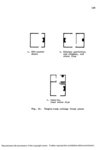
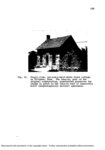
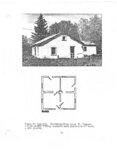
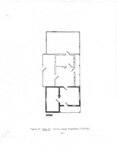
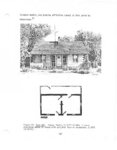
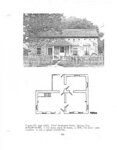
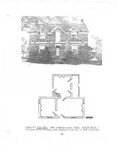
Show admonished merely to build substantial and attractive dwellings. 10 It follows that an ability to demonstrate uniformity in the housing practices of the Mormon pioneering generation would indicate, first, that the process of gradual architectural regionalization found in other American frontiers was conspicuously absent in Mormon Utah--reaffirming the centripetal nature of the Mormon frontier, and second, that this regional architectural tradition surfaced, not through prescriptive church practices, but as a response to conforming social pressures within the culture itself--validating the integrating capabilites of the town. Not surprisingly then, folk architectural research among the Latter-day Saints has, from the beginning, been airected toward testing housing uniformity. The first substantive treatment of Mormon folk building surfaced in the 1940s as part of J.E. Spencer's larger study of settlement practices in southern Utah's Virgin River Valley. 11 Spencer noted that little variation existed in house types or building materials in the Virgin communities--the predominant forms were one-and two-room cottages built of the local adobe brick. This simple, repetitive building style was, for Spencer, initially the result of a reduction in housing possibilities effected under primitive frontier conditions. Once in place, however, these utilitarian house forms were perpetuated both by a desire among later immigrants to follow established pioneer practices and, perhaps more importantly, by the fact that "new settlers from the eastern United States and northwestern Europe had cooperative village aid in building their new homes, so that the evolution and perpetuation of the adobe types were natural results of the Mormon way of life. 1112 Spencer's paper did not itself attract a great deal of scholarly 5 |