| OCR Text |
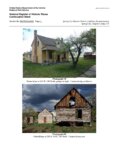
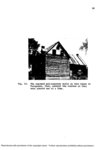
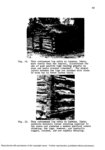
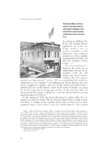
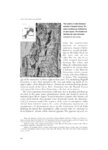
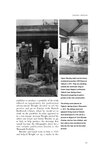
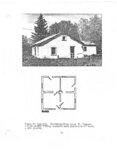
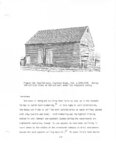
Show United States Department of the Interior National Park Service OMB No. 1024-0018, NPS Form National Register of Historic Places Continuation Sheet Section No. 8 Page 13 Spring City Historic District (Addition Documentation), Spring City, Sanpete County, UT Historic preservation was not necessarily on the minds of the residents during this period. An earthquake in 1961 may have contributed to the safety concerns for some buildings, particularly large disused barns. In 1968, the same year that several Spring City buildings were documented by the Historic American Buildings Survey (HABS), the mayor and city council passed an ordinance giving the Beautification Committee the power to “tear down unsightly, obsolete buildings.” 74 As a result, three stores, a service station, seven homes, 50 trees, and 29 stumps were removed, and the city received a certificate of merit from the state. Despite the committee’s best efforts, a large number of vacant buildings and outbuildings were left to the ravages of time. In 1972, Spring City was declared a “semi-living ghost town.” 75 Preservation and Expansion Period (1973-2021) ─ Outside of the Period of Significance The years between 1973 and 2021 are out of the historic period of significance but represent a balance between the remarkable efforts to preserve Spring City historic resources and the desire for new construction in the city’s redevelopment as the population in 2020 has almost regained its peak from 1900. In 1974, a group of architectural historians began documenting the historic resources of Spring City. Their efforts resulted in the listing of the Spring City Historic District on the National Register of Historic Places in 1980. At the time, the ranch houses were considered intrusions. The nomination preparers seemed particularly dismayed by an increase in mobile homes, noting “In 1973 there were thirteen trailers in town; today there are about twenty-two.” 76 The construction of a new Spring City Elementary School in 1986 was a sign that the population had bounced back to its post-war levels. In the 1980s, artists, academics, and artisans, began buying historic buildings and restoring them, many as second homes. Craig Paulsen, a general contractor, became a restoration specialist after he moved his family to Spring City. The stone houses, many unoccupied, were particularly sought after by the newcomers. Restoration projects were also started by long-time residents, including descendants of the original settlers. Preservation became so baked into the consciousness of the community that when a fire in the 1980s left an unremarkable one-story stone house with just its four walls, it was restored with the same attention devoted to much grander Spring City homes (147 N. 100 East, built in 1874). A few projects have rehabilitated marginally “non-contributory” homes in the 1980 nomination to contributing status. Moving outbuildings around to preserve them followed a long-established pattern in Spring City. Throughout the history of Spring City, buildings have been moved and repurposed, typically a log cabin, or other wood building. One of the best examples is the original “baptismal cabin” built over the Main Street spring in 1889. After a baptismal font was included in the 1911 LDS meetinghouse, the cabin was moved to become an addition for a house at 300 East and 200 South. 77 More recently, residents have begun saving unwanted outbuildings for preservation’s sake, with neighbors offering to move outbuildings to their own lot. This trend may wreak havoc with the historic integrity of individual resources, but the impact on the overall integrity of the district has been minimal as the rural ambiance provided by the outbuilding remains. Buildings have even been moved in from other towns. The circa 1870s Norwegian log house now at 151 W. 200 North was originally located in the town of Central, Utah. The move to Spring City in 1984 (its second move) saved the building, but also provided an academic study of logs that required no chinking (currently non-contributing). The most ambitious move was the Chester School & Meetinghouse, a circa 1892 stone building, under threat of demolition in Watson, p. 188-189. Carr, p. 100. 76 Spring City Historic District (1980), sec. 7, p. 2. 77 Watson, p. 44. 74 75 |