| OCR Text |
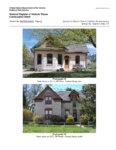
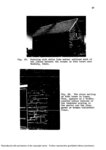
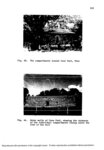
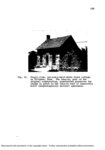
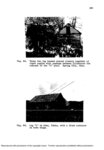
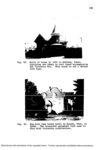
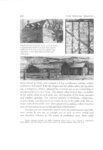
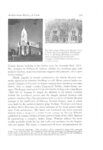
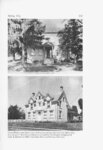
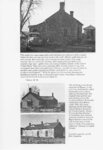
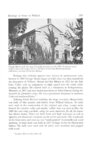
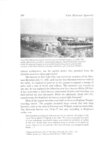
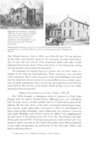
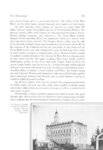
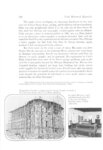
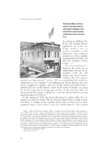
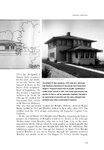
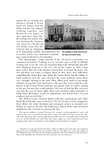
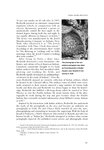
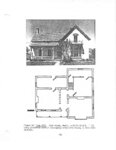
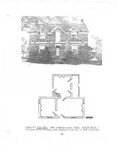
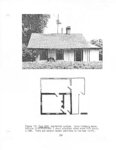
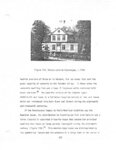
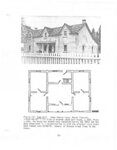
Show 220 Utah Historical Quarterly polygamist's two wives. The bargeboards' attractive gingerbread decoration on the two front gables and the addition of pinnacles at the peaks of the gables provide an even more attractive building than the house pattern book design.21 Examples of Carpenters' Gothic domestic architecture or frame cottages are more difficult to find in Utah than in most states due to the cost of milled lumber in comparison to the less expensive adobe. Fire may also be to blame for the fewer number of existing frame cottages. Two remaining examples of the style in Salt Lake City are the Thomas Quayle house and the August Carlson house. Octagon Mode. The Octagon Mode refers to the house form made popular by Orson Squire Fowler's book A Home for All or the Gravel Wall and Octagon Mode of Building first published in 1848. Fowler was a New York lecturer on phrenology and a prolific writer. He believed the Octagon Mode of building enclosed more floor space than the square, was more easily heated, and that its circulation patterns were more advantageous than other forms.22 Two octagon houses were erected in Provo and one in Salt Lake City, the latter supposedly designed by E.L.T. Harrison of Salt Lake Theatre fame.23 The Provo structures include the Strickland and Southworth (1856) houses. Salt Lake City's octagon, a two-story structure, is believed to have been the home of W. S. Godbe. Second Empire. Visually, the mansard roof and dormer windows are the clues identifying this French style.24 The building forms are well modeled and very three-dimensional in effect. The earliest structure approaching the style is the Staines-Jennings Mansion (Devereaux House), Salt Lake City, designed by William Paul (ca. 1857). Built for William Staines, it was enlarged in 1867 for the subsequent owner, William Jennings. Brigham Young's last building project, the Gardo House, designed by Joseph Ridges, (begun in 1876, demolished in 1925) was an even finer example of Second Empire. A third, but less pure example of Second Empire is the home of William H. Culmer (ca. 1881) in Salt Lake City.25 21 The John L. Edwards home (1868), Willard; the John Ashman home (1870), Fillmore; and the Fort Douglas officers' duplexes (1874-76) illustrate stone buildings with Gothic Revival decoration. 22 Marcus Wiffen, American Architecture Since 1780: A Guide to the Styles (Cambridge, Mass., 1969), 89. 23 Fred Markham, "Early Architecture, 1847-70," pp. 7, 19, typescript, U t a h State Historical Society, Salt Lake City. 34 Second Empire originated in France during the reign of Napoleon I I I (1852-70). The principal structure influencing this style was the New Louvre, built in 1852-57. 25 The Culmer home's claim to Second Empire style lies solely in the mansard roof and the dormer windows of the tower. The home is well known for its paintings by the original owner's brother, artist H.L.A. Culmer. |