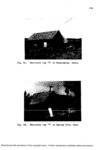
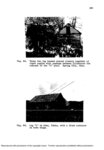
| OCR Text |
Show 210 Utah Historical Quarterly gests that once out from under the shadow of responsibility cast by townmaking, Bear River settlers were also subject to the gift of nomenclature. An important element in the development of the Bear River valleys was the confrontation of two distinct land systems and the penetration of each into adjoining states. As we have seen, one development in the valleys of the Bear River was the establishment of Mormon villages with their small irrigated farms. Challenging this land system were the more conventional land practices of homesteading, preemption, and squatters' rights. The Mormon village had proven itself as an effective means of occupying new regions, but it was limited in its potential in regions where it faced stiff competition for land, such as in the Idaho portions of the Bear River valleys. This was particularly apparent in Cache Valley. One of the Mormon system's weaknesses grew7 from the fact that land w7as originally distributed by church authorities and held only by right of occupancy. Thus, as Idaho homesteaders, stockmen, and speculators engrossed land under the federal land policy, Mormons were in very real danger of losing the claim occupancy gave them. With farms much smaller than the 160 acres of the homestead maximum, Mormon settlers undertook to meet this challenge by purchase under the Preemption Act or by having some agent landholder homestead in behalf of the other farmers w7ho occupied a quarter section. Most townsites and village farms were apparentely secured, but the system failed to retard the growing challenge of Gentile settlers w7ho became increasingly hostile toward Mormons.37 As the Gentile movement onto the land continued, it drastically modified Mormon land practices. In places like Weston in the Idaho portion of Cache Valley the village system had originally prevailed, but individuals soon found the urge to exercise their homestead rights to be almost overwhelming. The Mormon church continued to denounce scattering onto homesteads until at least 1882 but nevertheless failed to be consistent in the application of the policy, and many Weston Mormons homesteaded, forsaking their village lots for scattered farmsteads. The village continued to exist at Weston and elsewhere, but Mormon farmers lived scattered among Gentile neighbors and lost much of the internal clannishness incident to village life.38 N a t u r a l Resources in U t a h , " Utah Historical Quarterly 39 ( 1 9 7 1 ) : 2 4 3 - 4 5 ; and Charles S. Peterson, "Small Holding Land Patterns in U t a h and the Problem of Forest Watershed Management," Forest History 17 (July 1973) : 4 - 1 3 . 37 Wells, Anti-Mormonism in Idaho, pp. 11-20. :s For a general consideration of changing land practices see Charles S Peterson " I m p r i n t of Agricultural Systems on the U t a h Landscape," in Jackson, The Mormon Role in the Settlement of the West, pp. 9 1 - 1 0 7 ; for contemporary references to the move onto homesteads see Lars Frednckson, History of Weston, Idaho, ed. A. J. Simmonds (Logan: U t a h State University Press, 1972), especially entries for 1875-80. |