| OCR Text |
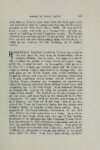
Show 152 Utah Historical Quarterly to terms w7ith a new language and with their own h u m a n nature. Space will permit only a few examples from each of these themes. S E T T L E M E N T LORE T h e lore of settlement focuses on three main events: the migration of the Latter-day Saints from Scandinavia to their new homes in Utah, the struggle with the natural environment, and conflict with the Indians. All of this lore emphasizes for a later, more happily situated, generation how hard life was for their forebears. T h e stories tell of sufferings in the handcart companies, 7 of a Danish convert burying his wife and four children on the plains. 8 They tell of struggles with snakes and grasshoppers and drought, and, perhaps most dramatically, they tell of struggles with the Indians, particularly during Chief W'alkara's WTar in 1853 and the Black Hawk W a r of 1867, when the residents of Sevier County had to evacuate their homes en masse. T h e following story is typical: T h e r e was a farm that was south of town. M y grandfather was about fourteen years old, working out for wages or whatever he could earn. H e and another boy were supposed to go to this farm to help do grain. They had gone by foot, and the sagebrush and grass was so tall t h a t it was like trees. These boys were just about to this farm, and they could hear these Indians whooping and carrying on, so they got down and crawled through the grass over to where they could see this ranch. T h e father must not have been at home at that time, and there was the m o t h e r and a little boy and then a baby. T h e little boy h a d run and hid and got away from them, and the Indians d i d n ' t pursue h i m ; but they took the mother and tied her across a horse and whipped the horse and m a d e it r u n with her. They took the baby and swung it around and hit its head on a tree and killed it. T h e n they set fire to the farm. 9 In a number of these stories the settlers rather than the Indians emerge victorious. In these stories, told probably to belittle the Indians and to give the settlers a feeling of superiority, rugged pioneer women frequently stand up to and then face down marauding Indian warriors, who usually respond admiringly with the statement: " H e a p brave squaw!" In some stories, however, as in the following, the "heap brave squaw" overcomes her adversary with woman's ingenuity: After the Indians and the white people had become a little friendly u p there, they didn't go to the fort quite as often. This one day there was this girl down in town and she was washing. They lived quite Susan Christensen and Doris Blackham, Monroe, U t a h , 1971. Ibid. Ibid. |