| OCR Text |
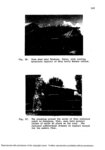
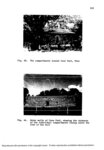
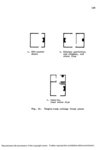
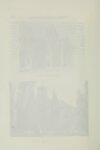
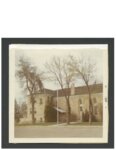
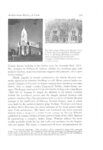
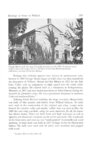
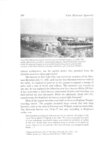
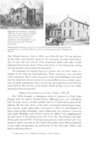
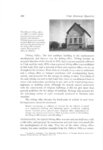
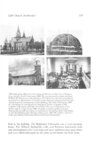
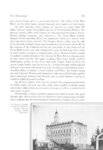
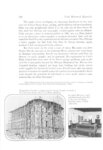
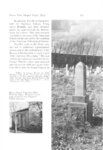
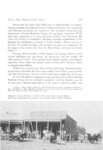
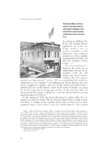
Show Architectural History of Utah 217 and Illinois. Greek Revival architecture did not become popular in those regions until after the Mormons left. As a result, there are no examples in Utah of the popular Greek temple house forms that abound in the small towns and villages of upstate New York. Buildings in Utah that do have pretensions to the Greek Revival style include county courthouses and a variety of church-owned structures. Greek Revival may have come to U t a h via pioneer carpenter-builders and architects such as T r u m a n O. Angell and William H. Folsom who used builders' or carpenters' guides by Peter Nicholson and the more well-known Asher Benjamin and Minard Lafever. These publications contained plates of classical details that could be used in the design of various types of structures. Early courthouses in Utah derived inspiration from the Old City Hall in Salt Lake City, designed by architect William H. Folsom and built in 1866. This structure appears to have been influenced by yet an earlier Salt Lake building, the Council House (1849). Both buildings— square two-story forms with shallow pitched, hipped roofs—reflect Georgian-Federal stylistic features that were repeated in the Washington County Courthouse (1867-74), St. George; the Utah County Courthouse (demolished), Provo; the Box Elder County Courthouse, Brigham City; and the Wasatch County Courthouse (1882, demolished), Heber City. T h e Old City Hall and all of these courthouses bear a remarkable similarity to two 1830s courthouses in Illinois. 17 T h e Greek Revival feeling of the Utah structures is mainly confined to decorative features, including bracketed and decorated friezes, octagonal cupolas on some, and classical porticos now replaced with other forms. T h e Territorial Capitol begun in Fillmore, Millard County, in 1855 and designed by T r u m a n O. Angell, is another example of the style. Plans called for a Greek cross topped by a Moorish dome; however, only one wing of the structure was completed. T h e existing wing exhibits a familiarity with the Greek Revival in the use of pilasters on the exterior walls to support a heavy entablature and lunettes above the second floor windows. Knowledge of Greek Revival had been displayed in the Nauvoo Temple, and certain basic features of it reappeared in Utah church buildings. T h e Endowment House and the Social Hall, both erected in Salt Lake City in the 1850s, tabernacles, and meetinghouses also adopted features of the style. T h e Bountiful Tabernacle (1862) is an especially fine example. T h e main portion of each structure consists of a large "Ibid., 56-57. |