| OCR Text |
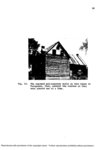
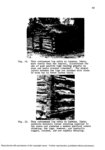
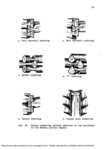
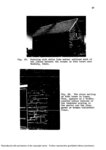
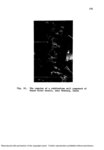
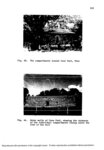
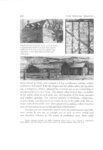
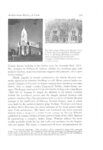
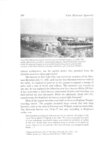
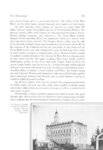
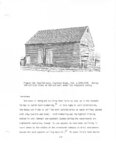
Show Architectural History of Utah 213 structures were erected without hewing the top and bottom log edges, the job of chinking, or filling in between the logs, was more laborious. Hewn logs provided a tighter joint, and when all four sides were hewn the exterior and interior walls could be covered with another material. Five major forms of notching are recorded in log construction in the United States, and log buildings in Utah exhibit all five varieties. The best notching for more permanent structures is the half or full dovetail notch, while the simpler saddle notch is frequently noted in the construction of hay and cattle barns and outbuildings.9 Mormon Forts. Perhaps the most indigenous architectural form on the early Utah landscape was the Mormon fort. The first of these forts or stockades was constructed on a block in Salt Lake City and later enlarged by two additional blocks. Ultimately, 450 log cabins were contained within the adobe-walled structure.10 Following Indian raids on several settlements in central Utah in 1853, Brigham Young ordered all settlements to build a fortification. In new settlements the fort was cooperatively constructed and functioned as the heart of the colony until the pioneers were able to build roads, canals, and houses.11 Thirty-five forts have been recorded as established, and most of these were occupied for only a short time. The forts varied depending upon available building material, labor, and date of construction. Frontier forts were usually designed in one of three forms: cabin row fort, detached wall fort, or contiguous compartment fort. Cove Fort in Millard County represents a well preserved example of the third type. Constructed of black lava rock in 1867, Cove Fort contains two one-story rows of single-room cabins along its north and south walls. The fort was never attacked by Indians and later became a hostelry on the route between Salt Lake City and St. George. Stone Masonry Buildings. Aside from adobe, the most popular material for building was stone, despite its disadvantages. The average pioneer was handicapped by his lack of knowledge in the craft of stonemasonry. Moreover, stone is difficult and costly to transport, and unless sources of stone were near at hand builders would most likely turn to a substitute. Nevertheless, stone buildings were constructed throughout the state, and stonemasonry may be seen in all building forms. Stone came into greater use after the initial settlement stage when the pioneer desired 9 Pitman, "Folk Housing," 70-76. '"Arrington, Great Basin Kingdom, 45, 47. 11 Ibid., 89. |