| OCR Text |
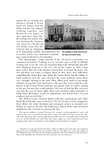
Show Forces That Shaped Utah's Dixie 113 howrever, that Gila monsters actually roll over on their backs to cool their hot feet. Nevertheless, woe be to the novice who ignored the certain realities of desert heat, as the tragedy of the Davidson family below Beaver D a m so sadly illustrates. 0 Dixie is desert, dependent upon the waters of the mighty, muddy Virgin River and tributaries, which waters bloated the denizens while it fed their thirsty crops. Its tributaries en route to the Colorado River carved their ways across mountains and into the bowels of mother earth, leaving escarpments, mesas, cliffs, canyons, and formations of great variety and exquisite beauty, especially during sunrise and sunset. Its flora and fauna are varied but restricted. Its weather is mild. When it is cold in Dixie, they say, "That's a good place to spend the winter." Dixie is also capricious. Dixieites can have fresh corn for Thanksgiving but freeze their fruit in May. Dixie is also springs—warm ones, some of them •—sand and soil, and opportunity limited only by the will and labor and technology of those who live there. But most of all, Dixie in the past has been out of the way: no harbor, no highways, no navigable rivers, no railroad, no space port— sort of leftover from the geography of the Colorado Plateau south and east and the Great Basin north and west. Getting to Dixie has always been a problem. Father Escalante related how cleverly their timid Pauche guide abandoned them at the crest of the Black Ridge. 7 Early Mormon settlers lamented their plight to Brigham Young. In effect, no one could build a road across the Black Ridge. Even Gentiles had sense enough to go around, choosing the route west from Cedar City to the Mountain Meadow7, Santa Clara Creek, Beaver Dam, and Vegas Springs on their wray to California. s Did that bother Brigham Young? Not at all! And Heber C. Kimball even less. Rapt in vision, the latter proclaimed: "I prophesy in the name of the Lord God that the saints will not only build a road across the Black Ridge, but will also build a temple to the Most High on the banks of the Virgin River. . . ,"!' And one thought there were problems before! So Mormons selected Peter Shirts to locate a route. He reported a good one along the east base of Pine Valley Mountain, except "James G. Bleak, "Annals of the Southern U t a h Mission, Book A," pp. 469-73, typescript, Dixie College Library, St. George, Utah. James Davidson and his wife and son died from lack of water in June 1869 en route from the river to Mormon Wells. 7 Ted J. Warner, ed., The Dominguez-Escalante Journal, trans. Fray Angelico Chavez (Provo, U t . : Brigham Young University Press, 1976), pp. 77-78. 8 The sites mentioned describe the route of the Old Spanish Trail and a portion of the later Mormon-California Trail. s Bleak, "Annals," p. 15. |